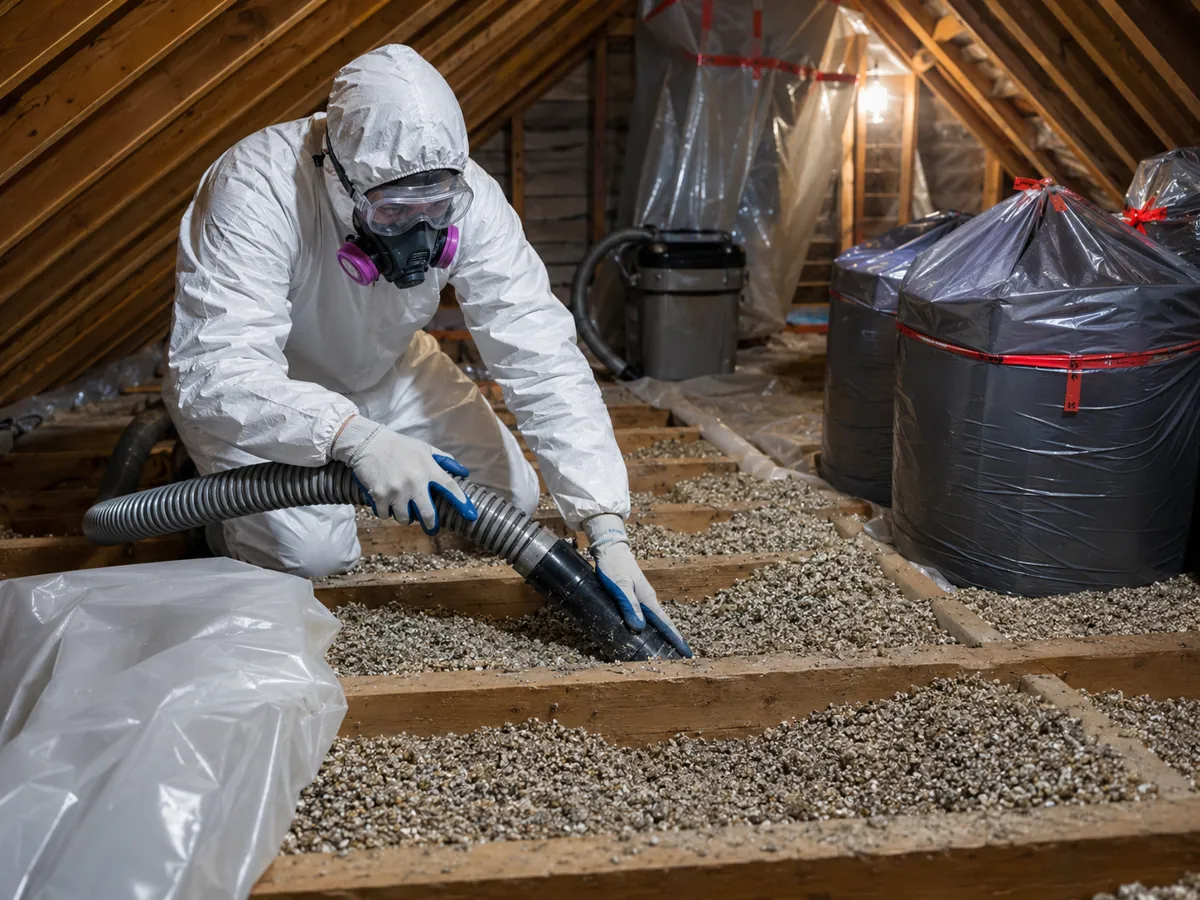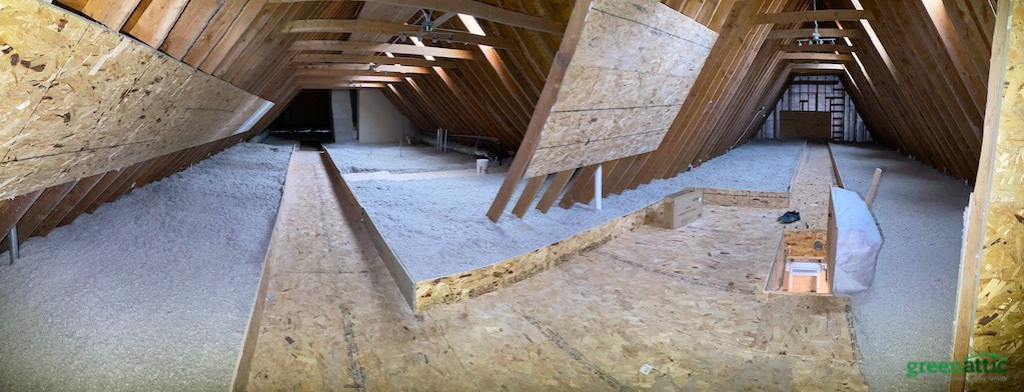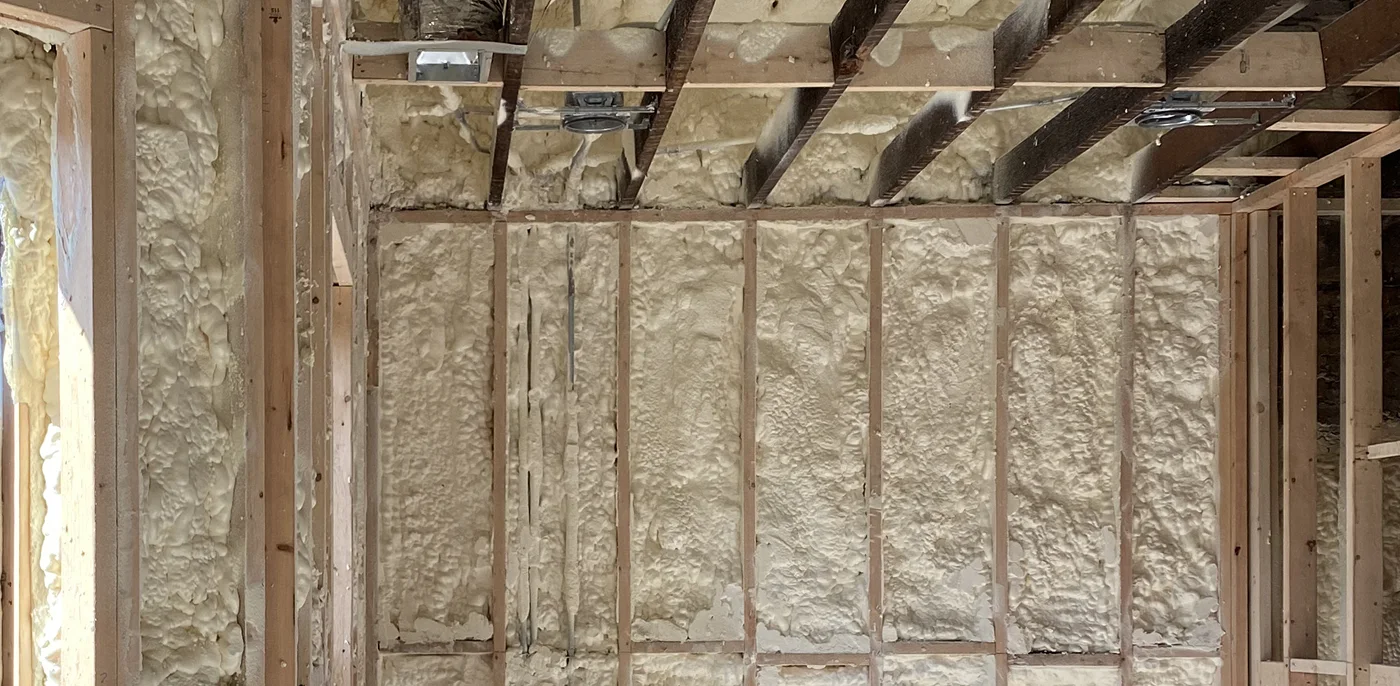

The cost of spray foam insulation in Chicagoland depends on factors such as foam type, thickness (R-value), project size, access, prep work, and old insulation removal.
Green Attic starting prices are about $0.75 per sq ft for 1 inch of open-cell foam and $1.25 per sq ft for 1 inch of closed-cell foam. To get an accurate estimate, start by evaluating your space, insulation goals, and the full scope of work.
These figures are based on Green Attic starting prices and should be used as planning numbers rather than fixed quotes.
Key Highlights
- The cost of spray foam insulation in Chicagoland is typically about $0.75 per sq ft for 1 inch of open-cell spray foam and $1.25 per sq ft for 1 inch of closed-cell spray foam.
- Open-cell spray foam usually costs less, while closed-cell spray foam provides more R-value per inch and better moisture resistance.
- Final spray foam pricing depends on foam type, thickness (R-value), access, project size, prep work, old insulation removal, and overall scope of work.
- Spray foam often makes the most sense in attics, basements, crawlspaces, rim joists, garages, and other hard-to-insulate areas with air leaks or moisture issues.
- When comparing quotes, look at the coverage, foam type, thickness, prep work, cleanup, and warranty, not just the total price.
Is Spray Foam the Right Fit for Your Home?
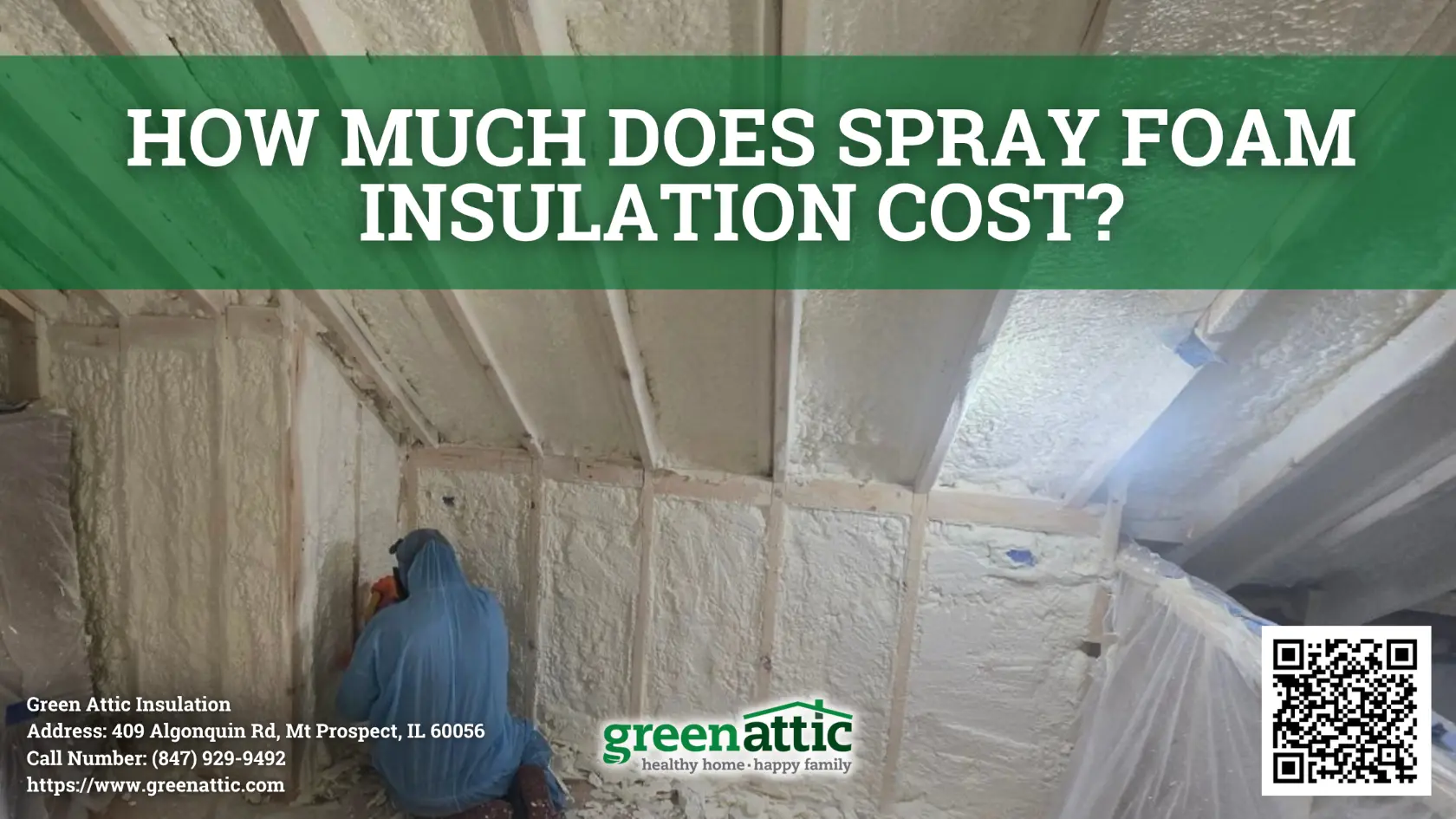
Spray foam insulation is not always the right choice for every home, but it can make sense when the problem is more than just low insulation levels. In spaces with moisture issues, drafts, air leaks, or hard-to-insulate areas, spray foam can do more than traditional insulation because it helps air seal while adding insulation at the same time.
There are two main types of spray foam insulation:
- Open-cell spray foam: Softer, lighter, and usually the lower-cost option.
- Closed-cell spray foam: Denser, more rigid, and provides more R-value per inch.
Open-cell spray foam is often a better fit when your goal is air sealing and insulation, while closed-cell spray foam is usually the better option when the space needs a higher R-value per inch or better moisture resistance.
Spray foam is often used in attics, garages, basements, crawlspaces, and rim joists where fiberglass or cellulose may not solve the whole problem. If the space only needs more insulation and does not have major air leaks or moisture concerns, cellulose or fiberglass may be enough at a lower cost.
Spray Foam Insulation Cost by Foam Type
The cost of spray foam insulation depends largely on the type of foam you choose. In most cases, open-cell spray foam is the lower-cost option, while closed-cell spray foam costs more because it provides a higher R-value per inch and is often used in areas where moisture resistance and added rigidity matter.
Final pricing also depends on thickness, prep work, access, old insulation removal, and the overall scope of the job.
The chart below shows the main differences between open-cell and closed-cell spray foam at a glance:
Open-cell vs. closed-cell spray foam at a glance (source: Green Attic pricing page).
This comparison helps explain why open-cell and closed-cell spray foam do not cost the same. Open-cell is usually the more affordable option, while closed-cell costs more because it provides more R-value per inch and better moisture resistance.
In Chicagoland’s IECC Climate Zone 5A, closed-cell spray polyurethane foam often costs more because it can provide higher R-value per inch, stronger air sealing, and better condensation control in rim joists, foundation walls, and other limited-space areas.
The best option for your home depends on the space and the result you want. If you mainly need lower-cost air sealing and insulation, open-cell spray foam may be enough. If you need higher insulation value in less space or better moisture control, closed-cell spray foam may be worth the extra cost.
For 2026 homeowners, the real cost of spray polyurethane foam should also be compared against current Illinois programs and utility incentives, including resources tied to the Illinois EPA Office of Energy, HOMES rebates, Nicor Gas, IHWAP, Peoples Gas, and ComEd. Because rebate rules and availability can change, homeowners should verify current details directly with their utility provider and the relevant Illinois program pages before making a final decision.
Average Spray Foam Cost by Project Size
Spray foam cost depends on the size of the space and the amount of work involved. In attics, pricing can vary based on the target R-value, layout, access, air sealing, and other prep work. In garages, cost can vary based on the foam type and how comfortable you want the space to be.
Attic Spray Foam Cost
Attic spray foam pricing depends on more than square footage alone. The total cost can change based on the foam type, the target R-value, access, and whether prep work or old insulation removal is part of the job.
The table below shows common attic spray foam cost ranges based on project size:
Estimated attic spray foam cost ranges for common project sizes.
Based on the table, smaller attic projects usually fall on the lower end of the price range, while larger attics tend to cost more because they require more material and labor.
Garage Spray Foam Cost
Garage spray foam insulation costs can vary based on the size of the garage, the type of foam used, and how comfortable you want the space to be.
The table below shows typical garage spray foam pricing based on the garage type:
Estimated garage insulation pricing based on garage type (sources: Green Attic pricing page).
Based on the table, garage spray foam costs usually increase with the size of the space and the scope of the job. Smaller attached garages often fall on the lower end, while detached or more involved projects tend to cost more. For 2-car garages, a project-specific quote is often the best way to estimate the final cost.
Spray Foam Insulation Cost Factors in Chicagoland
Many factors affect the cost of spray foam insulation in Chicagoland. Two homes can look similar at first, but the final price can still vary considerably depending on various factors.
In most cases, spray foam costs more when the project calls for additional material, skilled labor, or prep work to deliver strong long-term results for a more comfortable space. Projects in attics, crawlspaces, garages, rim joists, basements, and rooflines can all cost differently based on the space and the work involved.
In Chicago, spray foam project cost can also be shaped by code requirements, including the Chicago Energy Transformation Code, the Illinois Energy Conservation Code, air-impermeable insulation details, leakage reduction goals, vapor permeance, and whether thermal or ignition barriers are required.
Here are the main factors that affect spray foam insulation cost in Chicagoland:
- Square footage: Larger spaces require more material and labor.
- Type of spray foam: Open-cell spray foam usually costs less, while closed-cell spray foam costs more.
- Thickness and target R-value: The more insulation your space needs, the more foam is required, which increases the total cost.
- Condition of the space: Open, accessible areas are usually less expensive to insulate than irregular, tight, or cluttered spaces.
- Old insulation removal: Removing old insulation increases project cost because it includes labor, cleanup, and disposal, but it also supports a cleaner, better-performing installation.
- Prep work: Masking, air sealing, surface protection, and equipment setup are often part of the total project cost.
- Scope of work: Projects that include rim joists, roof decks, basement walls, or multiple areas of the home will usually cost more than a simple single-space installation.
Because project details can change the final price, it is important to compare the full scope of work, not just the final number on the quote.
When Spray Foam Is Worth the Cost
Spray foam insulation usually makes the most sense when a standard insulation upgrade is unlikely to solve the problem on its own. While it costs more upfront than fiberglass or cellulose, it can be worth the added cost in spaces where air sealing, moisture control, and higher insulation performance all matter.
In many homes, spray foam is worth the cost when:
- The space has major air leaks: Spray foam expands as it is applied, which helps seal gaps and reduce drafts.
- The area is hard to insulate using other materials: Tight or irregular spaces, such as rim joists and crawlspaces, are often better suited to spray foam.
- Moisture control is part of the problem: Closed-cell spray foam is often a better fit in basements, crawlspaces, and other areas where damp conditions are a concern.
- You need more R-value in less space: Closed-cell spray foam provides more R-value per inch, which can help when there is limited room for insulation.
- The room feels uncomfortable year-round: Garages, bonus rooms, and other problem areas that experience heat loss and drafts often benefit from spray foam, which improves both insulation and air sealing.
- You want the space to feel more like the rest of the house: If you are trying to make your basement or garage more usable and comfortable, spray foam can be worth the higher cost.
A good spray foam quote should also account for the details that affect performance, including vapor control, thermal bridging, ignition or thermal barrier requirements, and whether air sealing is part of the scope of work.
Case Study: Why Closed-Cell Spray Foam Made Sense in a Glenview Basement
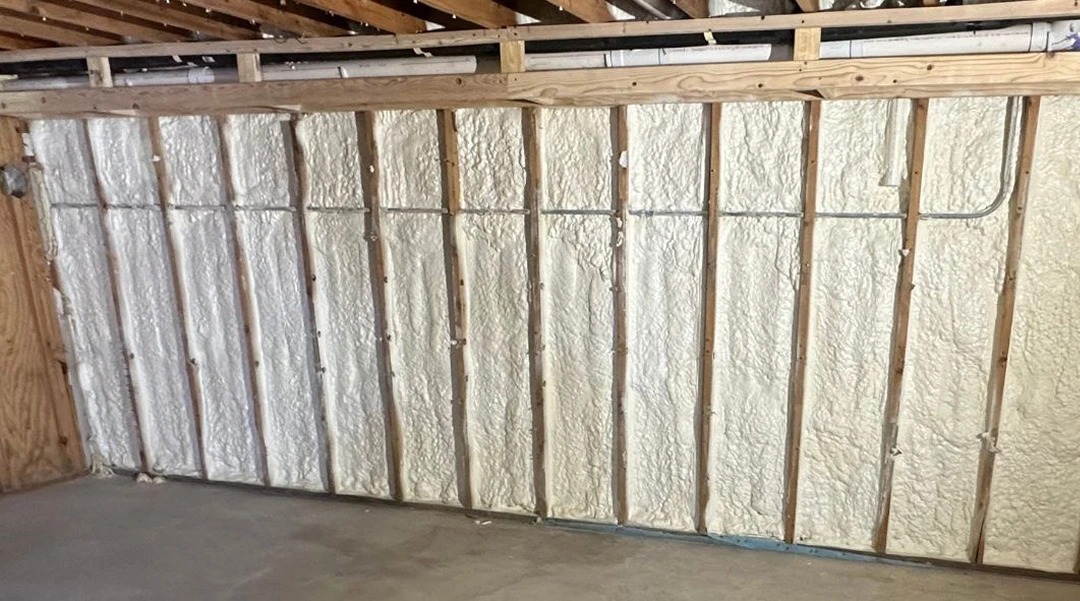
Green Attic Insulation Glenview basement spray foam insulation project.
Project Snapshot
Location: Glenview
Problem: Cold, damp basement with air leaks
Solution: Closed-cell spray foam on foundation walls and rim joists
Result: Drier, more comfortable basement ready for finishing
In this Green Attic Glenview project, the space had bare concrete walls, excess humidity, and noticeable air leaks around the foundation and rim joists, and the homeowner wanted to make it more comfortable and usable year-round.
To address both insulation and moisture concerns, Green Attic installed closed-cell spray foam on the foundation walls and sealed the rim joists to stop drafts. The team applied a continuous 2- to 3-inch layer of spray foam, creating a stronger thermal barrier and helping keep the walls drier than with standard insulation.
For this homeowner, the added cost was worth it. The goal was not just a higher R-value but a basement that felt less drafty, stayed drier, and could be used every day. The result was a conditioned space ready for finishing or regular use.
Spray Foam vs. Other Insulation Options
Spray foam insulation is not always the best choice for every home. It often makes sense when the space has air leaks, moisture issues, or other problems that standard insulation may not solve on its own, but some spaces do not need that level of insulation, especially at a higher cost.
The table below shows prices for spray foam and common attic insulation options in Chicagoland:
Spray foam vs. other insulation options in Chicagoland (source: Green Attic pricing page).
If the main issue is simply low insulation levels in an open attic, fiberglass or cellulose may do the job well at a lower cost. Spray foam usually makes more sense when the space also needs moisture control, stronger air sealing, or more insulation value in a limited space.
If budget is the main concern, another insulation type may be the better fit. Open-cell spray foam is generally priced at $0.75 per sq ft for 1 inch, and closed-cell spray foam is $1.25 per sq ft, while fiberglass attic insulation typically costs $2.00 to $2.75 per sq ft, and cellulose attic insulation typically costs $2.25 to $3.00 per sq ft.
Overall, the right choice depends on the space, the problem you are trying to solve, and your budget. In some homes, spray foam is the best long-term upgrade. In others, fiberglass or cellulose may deliver the performance you need for less.
Comparing Spray Foam Insulation Quotes
Spray foam quotes can vary a lot, even for similar spaces, because one contractor may include more prep work, more materials, or a more complete scope of work than others. The lowest price is not always the best value if it leaves out important details that affect performance, comfort, or long-term results.
When comparing spray foam quotes, check the following:
- Foam type: Make sure the quote clearly states whether it is for open-cell or closed-cell spray foam.
- Coverage and thickness: Check how much area will be sprayed and how many inches of foam will be installed.
- R-Value: The quote should clearly show the insulation level being installed, especially if the project is designed to meet a target R-value.
- Unit pricing: Ask whether pricing is based on square foot, board foot, or total project cost. This way, you can compare quotes more easily.
- Prep work: Confirm whether masking, surface protection, setup, and basic air sealing are included.
- Old insulation removal: If you need to remove your old insulation, make sure it is listed clearly in the quote.
- Access and labor: Low attics, hard-to-reach areas, and tight crawlspaces often increase labor costs.
- Cleanup and disposal: Check whether debris removal and cleanup are part of the job.
- Warranty: Look for workmanship coverage and any product warranty details.
- Scope of work: The estimate should clearly list the areas that will be insulated and any related work that is part of the project.
It also helps to ask a few direct questions before choosing a contractor:
- “Why is this foam type recommended for this space?”
- “How thick will the foam be applied?”
- “Does the quote include prep work, removal, and cleanup?”
- “Are there any extra charges not listed here?”
- “What results should I expect after installation?”
A better quote is usually the one that explains the job clearly, matches the needs of the space, and shows what is included from start to finish. The best option is the one that fits the condition of the home and the full scope of work, not just the lowest upfront cost.
Why Homeowners Hire a Professional for Spray Foam Installation
Spray foam insulation can help reduce drafts, balance room temperatures, and make uncomfortable spaces more usable, but results depend on how well it is installed.
A thorough quote includes the prep work and proper installation conditions that help spray foam perform at its best. Because spray foam is not a DIY project, it should be installed at the right thickness, in the right areas, using the right tools, and under the right conditions for lasting results.
A qualified contractor should inspect the space first, recommend the right type of foam, and catch issues that can affect the job, such as moisture, ventilation, limited access, or old insulation that should be removed.
Good installation leads to better air sealing, more even coverage, stronger moisture control, and longer-lasting performance. In many cases, the difference between a project that works for years and one that falls short comes down to execution.
Frequently Asked Questions
How much does it cost to spray foam a 20x20 garage?
The cost to spray foam a 20x20 garage may start around $1,500 for a 1-car or attached garage project, while 2-car garage projects start at $2,200. Detached garages usually require a custom quote. Final cost depends on the foam type, thickness, access, prep work, and whether the ceiling is included.
How much does it cost to spray foam a 40x60 building?
A 40x60 building usually needs a custom quote. Green Attic starting prices for spray foam are about $0.75 per sq ft for 1 inch of open-cell foam and $1.25 per sq ft for 1 inch of closed-cell foam, but final cost depends on foam thickness, access, prep work, and whether you are insulating the walls, roof, ceiling, or multiple areas.
How much to insulate a 2,000 sq ft house?
A 2,000 sq ft house does not have a fixed spray foam price because the total depends on how much of the home is being sprayed and what type of foam is used. Green Attic starting prices are about $0.75 per sq ft for 1 inch of open-cell spray foam and $1.25 per sq ft for 1 inch of closed-cell spray foam. Final cost depends on foam thickness, access, prep work, and whether the project includes the attic, walls, rim joists, basement, garage, or multiple areas.
Can you put spray foam insulation over drywall?
Yes, spray foam insulation can be added to existing walls through the drywall by using specialized low-expansion injection foam. This can be a great way to improve comfort and energy efficiency without removing all the drywall, especially if the wall cavities are empty. For the best results, professional installation is recommended to avoid drywall damage and ensure even coverage.
What permits are needed for spray foam installation?
Permit requirements for spray foam insulation vary by municipality and project scope. In many cases, permits may be required for new construction, additions, major renovations, or projects that affect ventilation, attic access, or fire-rated assemblies. Homeowners should confirm permit needs with their contractor or local building department before work begins.
How long does spray foam insulation last?
Spray foam insulation can remain effective for decades when it is installed properly and kept in a stable building assembly. Actual lifespan depends on the product, installation quality, moisture exposure, and whether the assembly is later disturbed.
How thick should spray foam insulation be?
The right spray foam thickness depends on the foam type, where it is installed, the target R-value, and local code requirements. In many projects, closed-cell foam is applied in thinner layers than open-cell foam because it provides more R-value per inch.
How much does a 55-gallon drum of spray foam cover?
Actual spray foam yield depends on the product, foam type, application thickness, and jobsite conditions. Homeowners should rely on manufacturer yield data and contractor estimates instead of assuming a universal coverage amount.
About the Author
Dumitru Nicolaescu is a licensed Chicago roofing and attic insulation professional with over 25 years of extensive experience in the construction industry. He specializes in improving home comfort and energy efficiency through insulation upgrades, air sealing, and ventilation best practices.
President and owner of Green Attic Insulation Chicago
Share with the world