


At Green Attic in Chicago, we understand that proper attic ventilation is essential for maintaining a comfortable and energy-efficient home.
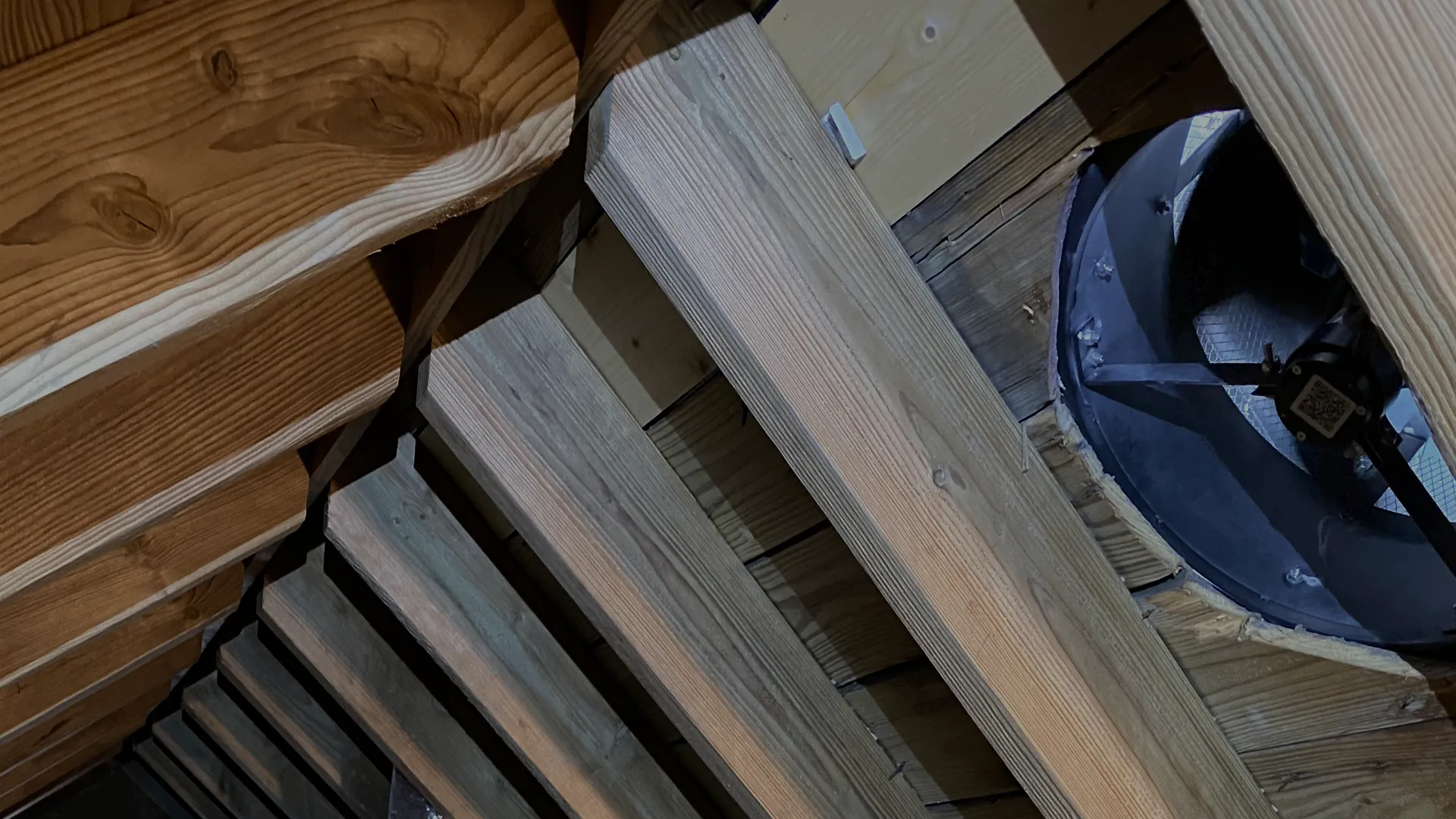
Attic Ventilation Contractor

Trusted by homeowners for reliable, energy-saving insulation solutions.




Request a Quote Today
Please Fill Out the Form Below
First name *
Last name *
Email *
Phone *
Address, City, State, Zip *
Tell us more about your project
Get a Free Quote



Attic Ventilation Solutions for Long-Term Roof Protection

Solar Power Attic Fan

Attic Baffles

Bath Fan Exhaust
How to Properly Vent an Attic
1. Look for vents. There should be vents in the soffits (the underside of the eaves) and at the peak of the roof. If you don't see any vents, or if they're blocked, then your attic is not properly vented.
2. Feel the ceiling. On a hot day, if the ceiling feels warm, then your attic is not properly vented. The heat from the attic is being transferred to the living space below, which can make your home uncomfortable and increase your energy bills.
3. Look for signs of moisture. If you see moisture on the rafters, insulation, or other surfaces in the attic, then this is a sign that your attic is not properly vented. Moisture can contribute to mold growth, which may affect building materials and indoor air quality.
4. Check for ice dams. In the winter, if you see ice dams forming on your gutters, this is a sign that your attic is not properly vented. Ice dams form when warm air from the living space below melts the snow on the roof, and then the melted snow refreezes on the eaves. This can damage your gutters and roof, and it can also lead to water leaks into your home.
5. Baffles: These are typically installed at the eaves to maintain a clear air path from the soffit vents into the attic. If you have insulation in your attic, make sure it's not blocking the soffit vents.
2. Feel the ceiling. On a hot day, if the ceiling feels warm, then your attic is not properly vented. The heat from the attic is being transferred to the living space below, which can make your home uncomfortable and increase your energy bills.
3. Look for signs of moisture. If you see moisture on the rafters, insulation, or other surfaces in the attic, then this is a sign that your attic is not properly vented. Moisture can contribute to mold growth, which may affect building materials and indoor air quality.
4. Check for ice dams. In the winter, if you see ice dams forming on your gutters, this is a sign that your attic is not properly vented. Ice dams form when warm air from the living space below melts the snow on the roof, and then the melted snow refreezes on the eaves. This can damage your gutters and roof, and it can also lead to water leaks into your home.
5. Baffles: These are typically installed at the eaves to maintain a clear air path from the soffit vents into the attic. If you have insulation in your attic, make sure it's not blocking the soffit vents.
Insulation & Ventilation Terms
Experience the Benefits of Attic Ventilation
Discover the benefits of our high-performance heat pumps, delivering efficient heating and cooling, advanced temperature control, eco-friendly operation, and reliable year-round comfort.

Prevent Ice Dams & Water Damage

Heating Range
-22°f - 75°f

Cooling Range
5°f - 129°f

Horizontal Discharge Air on The Outdoor Unit

Improve indoor air quality

May be eligible for a $300 rebate
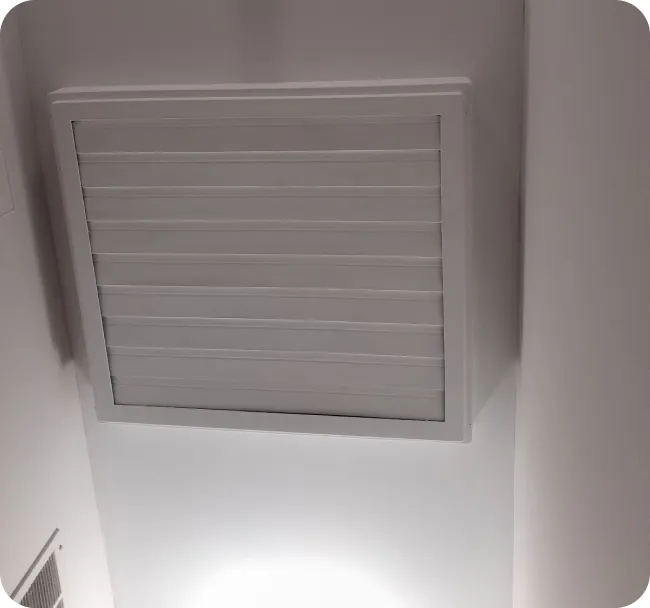
Proper home ventilation prevents condensation buildup
Stopping condensation is essential for maintaining a healthy and comfortable living environment.
By implementing proper insulation and ventilation techniques, you can effectively reduce and prevent condensation buildup in your home.
This helps reduce conditions that can contribute to mold growth, water damage, and deteriorating indoor air quality.
By implementing proper insulation and ventilation techniques, you can effectively reduce and prevent condensation buildup in your home.
This helps reduce conditions that can contribute to mold growth, water damage, and deteriorating indoor air quality.
Ventilation is crucial combined with solar fan and passive vents
Each category of ventilation is essential and if all 5 can be utilized that would be ideal. However due to structural considerations you may only get two or three types.
If you have the option cross gable ventilation has a great performance track record. Cross gable ventilation provides the most efficient air flow and can also be utilized with a power vent at one end of the gable.
This is often see in grade level large scale parking garages to remove carbon dioxide from vehicle exhaust. Soffit vents can be replaced with low profile vents near the bottom of the roof if there are no overhangs for air intake.
Ventilation is crucial combined with solar fan and passive vents, the attic can remain as close to outside temperature as possible.
If you have the option cross gable ventilation has a great performance track record. Cross gable ventilation provides the most efficient air flow and can also be utilized with a power vent at one end of the gable.
This is often see in grade level large scale parking garages to remove carbon dioxide from vehicle exhaust. Soffit vents can be replaced with low profile vents near the bottom of the roof if there are no overhangs for air intake.
Ventilation is crucial combined with solar fan and passive vents, the attic can remain as close to outside temperature as possible.
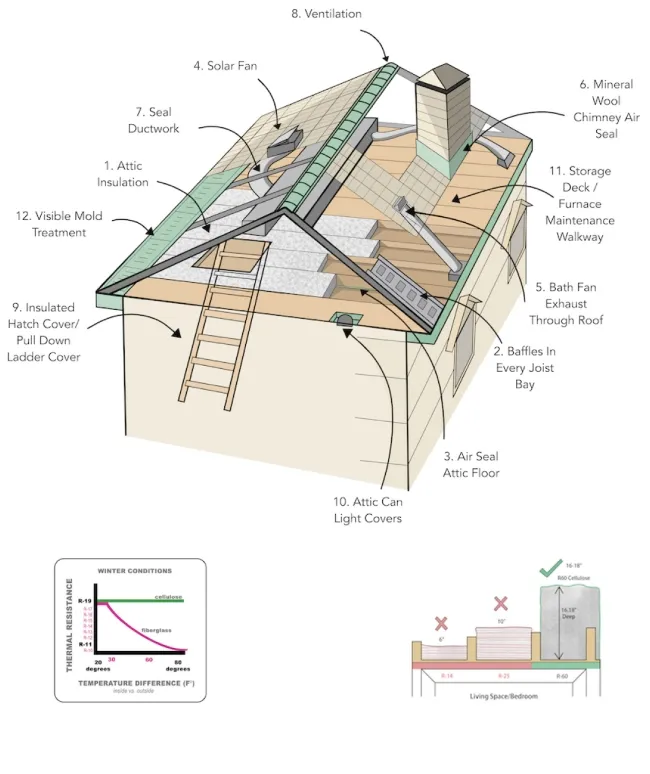
✓ Soffit Vents / Ridge vents
✓ Power Vents / Solar or electric
✓ Gable Vents
✓ Bath Fan / Kitchen Fan Exhaust Vents
✓ Fan Vents / Passive mushroom Vents / Roof vents
✓ Power Vents / Solar or electric
✓ Gable Vents
✓ Bath Fan / Kitchen Fan Exhaust Vents
✓ Fan Vents / Passive mushroom Vents / Roof vents
Optimal Ventilation Solutions for Improved Air Flow and Climate Control
Our comprehensive range of ventilation options ensures optimal air flow and climate control for your home. From cross gable ventilation and soffit vents to power vents, continuous ridge vents, and passive roof vents, we offer effective solutions tailored to your specific needs.
With the addition of solar fans for fresh air intake and exhaust, you can enjoy a cooler and more comfortable living environment while reducing energy consumption. Trust our expertise in creating a well-ventilated home that promotes better air quality and temperature regulation throughout the year.
With the addition of solar fans for fresh air intake and exhaust, you can enjoy a cooler and more comfortable living environment while reducing energy consumption. Trust our expertise in creating a well-ventilated home that promotes better air quality and temperature regulation throughout the year.

2a. Soffit Vents - Essential Rules for Optimal Performance
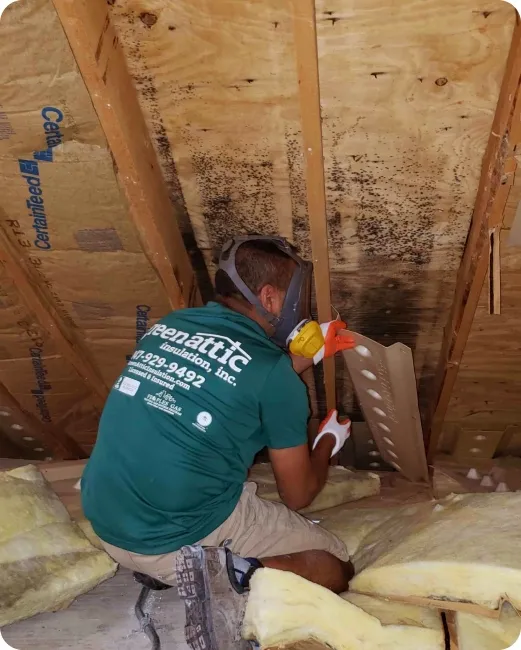
See here in this photo is our field supervisor Charlie removing an existing baffle to expose black mold growth as a result of soffit air intake meeting warm air from the attic that un-intentionally escaped from the living space in winter, warming the fiberglass enough to create the condensation (think cold glass of ice water on a picnic table in the hot summer sun).
Ventilation from the soffits must serve some better purpose than to be trapped behind insulation or to be directed into the wrong areas of the attic with no air flow balance.
Air flow balance is essential to a healthy vented attic
Ventilation from the soffits must serve some better purpose than to be trapped behind insulation or to be directed into the wrong areas of the attic with no air flow balance.
Air flow balance is essential to a healthy vented attic
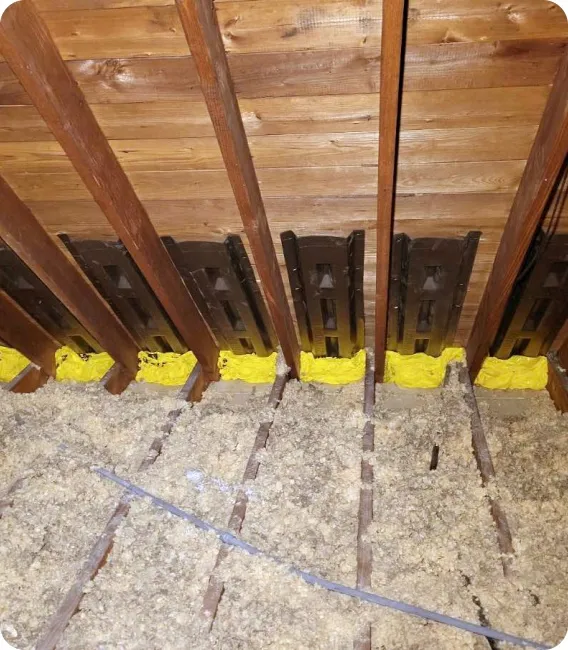
2b. Soffit Ventilation / Baffles.
We install baffles in every joist bay, not just where ventilation is present.
In regard to soffit vents, Green Attic Insulation distinguishes itself from local competitors in one valuable way, we install soffits in every joist bay, not just ” were ventilation is present ” as seen by competitors, leaving the homeowner with less than desirable results.
Lets be clear, the entire soffits is an air chute designed to pull air through each joist bay, not just where perforated soffits are present (which is every 4-8 ft) without air flow across the entire soffit the sheathing will not be optimally cooled.
Lets be clear, the entire soffits is an air chute designed to pull air through each joist bay, not just where perforated soffits are present (which is every 4-8 ft) without air flow across the entire soffit the sheathing will not be optimally cooled.
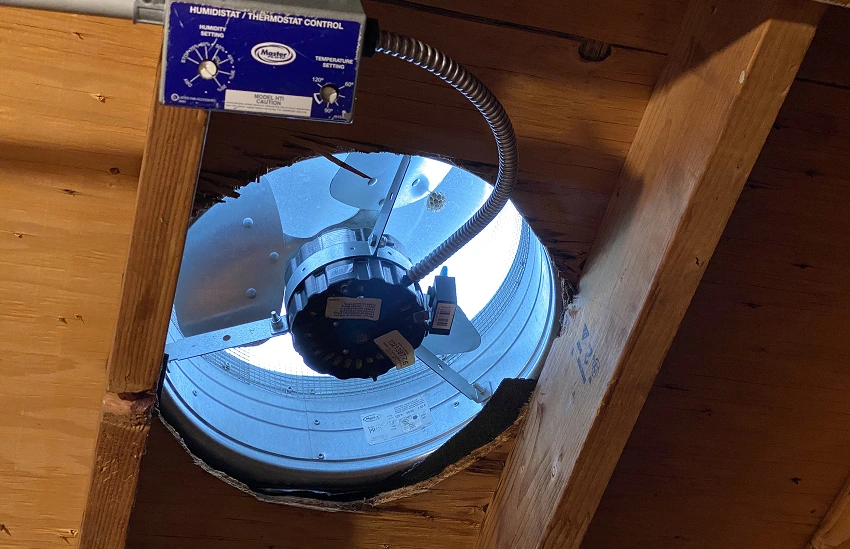
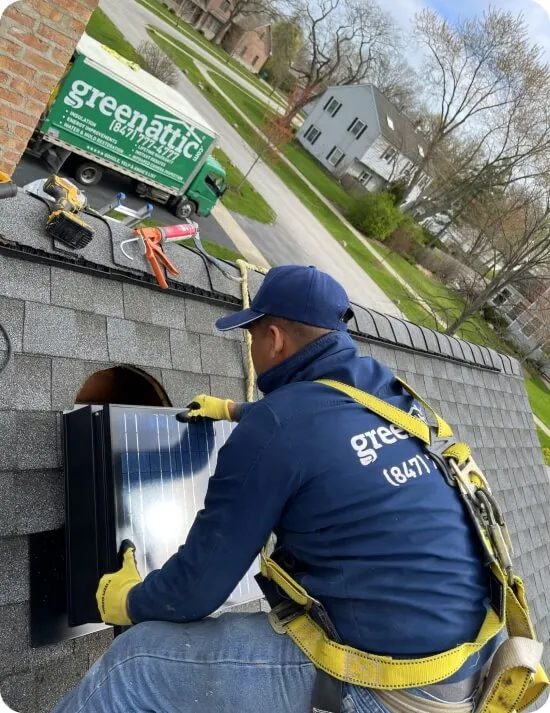
3. Solar attic fan are active ventilation
Power Vents – Fans Create Active Powered Ventilation / Solar or Electrical
Powered vents can be electrically powered or solar powered. Powered vents can provide more air movement but must be installed with consideration of air flow balance.
Considerations for vents are calculations to determine the minimum required net free ventilating area (NFVA) using the 1:300 ratio or 1: 600 of upper attic area.
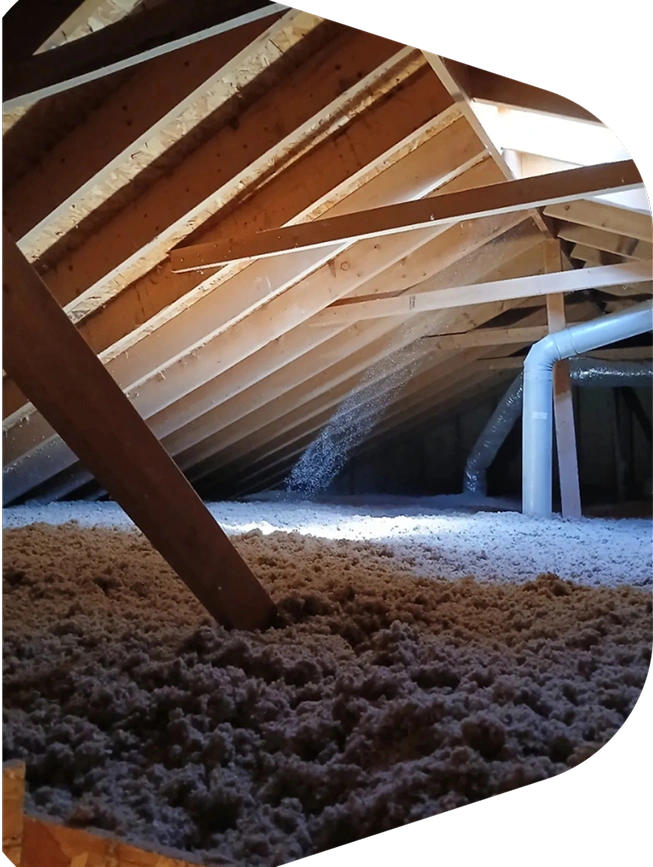
This is only possible when the soffits are open and baffles are properly installed to prevent insulation from clogging the soffits.
Considerations for vents are calculations to determine the minimum required net free ventilating area (NFVA) using the 1:300 ratio or 1: 600 of upper attic area.
This is only possible when the soffits are open and baffles are properly installed to prevent insulation from clogging the soffits.
4. Continuous Ridge Vent is installed at the top of the roof / ridge
This allows outward air flow along the top of the roof. Look at your neighborhood, each house with a raised 1-2″ peak on the ridge has one already.
Continuous means end to end ventilation. Since air movement is the key to good ventilation, it must have an air intake source in order to be effective.
Most new re-roofs include the upgrade to continuous ridge vents but must take into account air movement / balance.
Continuous means end to end ventilation. Since air movement is the key to good ventilation, it must have an air intake source in order to be effective.
Most new re-roofs include the upgrade to continuous ridge vents but must take into account air movement / balance.

5. Passive vents are not to be confused with the need for active powered ventilation
Cap Vents / Mushroom Vents / Passive Roof Vents
Passive mushroom vents are less common in new construction as the continuous ridge vent is replacing them as it provides less penetrations and more air flow.
Passive vents are also outtake vents and are designed to allow warm air to escape naturally in summer, and prevent a moist environment in winter.
Passive vents are not to be confused with active powered ventilation. In each case, a vented attic must perform in conjunction with a completely sealed attic floor to prevent air intake from the conditioned living space.
Passive vents are also outtake vents and are designed to allow warm air to escape naturally in summer, and prevent a moist environment in winter.
Passive vents are not to be confused with active powered ventilation. In each case, a vented attic must perform in conjunction with a completely sealed attic floor to prevent air intake from the conditioned living space.

6. Solar attic fans can support attic ventilation when the attic is properly prepared
Each home is unique, and each homeowner has specific needs, that being said, there are some simple truths to follow when it comes to ventilation.
1. In a vented unconditioned attic you can never have too much ventilation; the goal of a vented attic is to keep the attic as close to exterior temperature as possible.
2. In a conditioned / semi-conditioned attic, keeping outside air from getting in is equally essential to the air quality and health of the organic building materials.
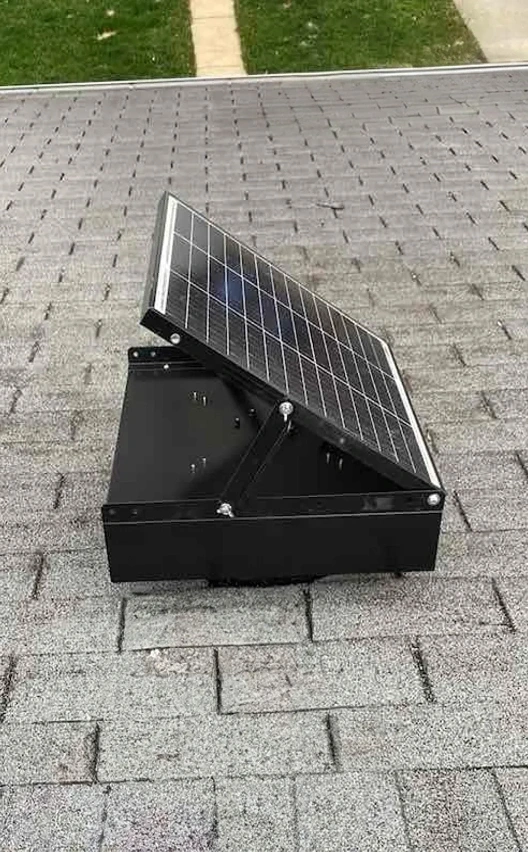
A solar attic fan can support attic exhaust only after the attic floor is air-sealed, insulation is brought to the proper depth, typically R-60 for Green Attic attic projects, and intake ventilation is balanced with exhaust. It runs on direct sunlight during standard solar-only operation.
1. In a vented unconditioned attic you can never have too much ventilation; the goal of a vented attic is to keep the attic as close to exterior temperature as possible.
2. In a conditioned / semi-conditioned attic, keeping outside air from getting in is equally essential to the air quality and health of the organic building materials.
A solar attic fan can support attic exhaust only after the attic floor is air-sealed, insulation is brought to the proper depth, typically R-60 for Green Attic attic projects, and intake ventilation is balanced with exhaust. It runs on direct sunlight during standard solar-only operation.
Frequently Asked Question
What is the best way to ventilate your attic?
The best way to ventilate your attic is to pair continuous soffit intake with a continuous ridge vent so your ventilation works evenly and effectively from eave to peak.
This passive setup lets cool air flow in at the eaves and naturally push hot, moist air out at the peak, helping keep the attic drier and healthier.
You will get excellent airflow by keeping soffit vents clear with baffles, balancing intake to match or slightly exceed exhaust, and using a single exhaust vent type for a smooth, consistent system.
This passive setup lets cool air flow in at the eaves and naturally push hot, moist air out at the peak, helping keep the attic drier and healthier.
You will get excellent airflow by keeping soffit vents clear with baffles, balancing intake to match or slightly exceed exhaust, and using a single exhaust vent type for a smooth, consistent system.
What are signs of poor attic ventilation?
Signs of poor attic ventilation include an unusually hot attic, moisture buildup (such as a musty smell or mold and mildew), and rust on metal components like nails or truss plates, all of which are helpful cues that a simple airflow upgrade can keep your attic drier, cooler, and better protected.
You might also notice damp or sagging insulation, shingles that curl or blister sooner than expected, ice dams along the eaves in winter, or higher-than-normal energy bills, all of which are useful signs that improving attic airflow can boost comfort and help protect your roof.
You might also notice damp or sagging insulation, shingles that curl or blister sooner than expected, ice dams along the eaves in winter, or higher-than-normal energy bills, all of which are useful signs that improving attic airflow can boost comfort and help protect your roof.
Can I upgrade my attic ventilation without compromising the historic character or structure of my home?
Yes, you can upgrade attic ventilation in a historic home without compromising its character or structure by choosing passive, low-profile options such as ridge vents, soffit vents, or drip-edge vents, which are typically invisible from the ground.
The key is to build a balanced, steady airflow plan, combine it with breathable insulation, and rely on gentle, reversible installation techniques that safeguard the historic fabric of your home.
For the best preservation, partner with a professional who has experience with historic homes so ventilation improvements are added carefully, roof framing stays protected, and any local requirements are handled smoothly.
The key is to build a balanced, steady airflow plan, combine it with breathable insulation, and rely on gentle, reversible installation techniques that safeguard the historic fabric of your home.
For the best preservation, partner with a professional who has experience with historic homes so ventilation improvements are added carefully, roof framing stays protected, and any local requirements are handled smoothly.
How do I find an attic ventilation contractor who understands soffit-to-ridge balance and not just “add a fan”?
To find an attic ventilation contractor who understands soffit-to-ridge balance, you should look for roofing or specialized insulation contractors, certified insulation specialists, or building science experts.
Ask them to explain how they size ventilation using Net Free Ventilating Area, not just recommend a fan. You should also ask how they will ensure proper soffit intake with baffles, and whether they use diagnostic tools such as a manometer or smoke testing to verify flow from soffit to ridge.
Ask them to explain how they size ventilation using Net Free Ventilating Area, not just recommend a fan. You should also ask how they will ensure proper soffit intake with baffles, and whether they use diagnostic tools such as a manometer or smoke testing to verify flow from soffit to ridge.
Will adding a powered fan risk pulling conditioned air from the house or increasing moisture problems?
Yes, adding a powered fan can pull conditioned air from your home through small ceiling gaps, so sealing those leaks first helps you keep comfort high and energy use in check.
In humid conditions, it can also draw in moist outdoor air, which makes moisture management a smart next step for keeping the attic dry and performing its best.
The good news is that you can avoid these issues by focusing first on air sealing the attic floor and using a well-balanced passive system (soffit intake plus ridge exhaust) that supports steady, natural airflow.
In humid conditions, it can also draw in moist outdoor air, which makes moisture management a smart next step for keeping the attic dry and performing its best.
The good news is that you can avoid these issues by focusing first on air sealing the attic floor and using a well-balanced passive system (soffit intake plus ridge exhaust) that supports steady, natural airflow.
Service Areas
Northwest Suburbs

North Shore
Learn More


