


Best Attic Insulation for Pest Control in Chicagoland
At Green Attic in Chicago, we understand that safe and thorough attic pest control is essential for protecting your home from damage, contamination, and unwanted infestations.

Trusted by homeowners for reliable, energy-saving insulation solutions.




Request a Quote Today
Please Fill Out the Form Below
First name *
Last name *
Email *
Phone *
Address, City, State, Zip *
Tell us more about your project
Get a Free Quote



Common questions asked by homeowners during the pest insulation estimating process:
How much does pest control cost?
Pest control disinfection typically costs $1.50 to $5.00 per square foot, making it an affordable and efficient solution for keeping your home clean and safe.
Does my homeowners insurance cover costs?
Yes, in some cases some insurance policies cover rodent infiltration / damage from rodents such as raccoons.
Should we have all the insulation removed first?
Most of the time no removal is needed of existing insulation, but rather disinfection of the entire of the attic. This link helps explain only to remove in case of contamination from feces or urine.
Will the insulation smell if we leave it in place after disinfection? This is a loaded question with multiple variables, but the short answer is yes, if contaminated pest insulation remains in place while encapsulated there may be an odor in warmer temperatures.
Do I need to leave my home during the remediation treatment portion?
Most cases no, rodent removal from attic (when the attic is air sealed) keep the attic space separate from the living space. While ventilation methods and plastic to keep work areas separate from the living space can be used when needed.
What is the difference between fiberglass insulation and cellulose insulation? Learn More
Does cellulose insulation get mineral treatment to prevent pests? Yes!
Pest control disinfection typically costs $1.50 to $5.00 per square foot, making it an affordable and efficient solution for keeping your home clean and safe.
Does my homeowners insurance cover costs?
Yes, in some cases some insurance policies cover rodent infiltration / damage from rodents such as raccoons.
Should we have all the insulation removed first?
Most of the time no removal is needed of existing insulation, but rather disinfection of the entire of the attic. This link helps explain only to remove in case of contamination from feces or urine.
Will the insulation smell if we leave it in place after disinfection? This is a loaded question with multiple variables, but the short answer is yes, if contaminated pest insulation remains in place while encapsulated there may be an odor in warmer temperatures.
Do I need to leave my home during the remediation treatment portion?
Most cases no, rodent removal from attic (when the attic is air sealed) keep the attic space separate from the living space. While ventilation methods and plastic to keep work areas separate from the living space can be used when needed.
What is the difference between fiberglass insulation and cellulose insulation? Learn More
Does cellulose insulation get mineral treatment to prevent pests? Yes!
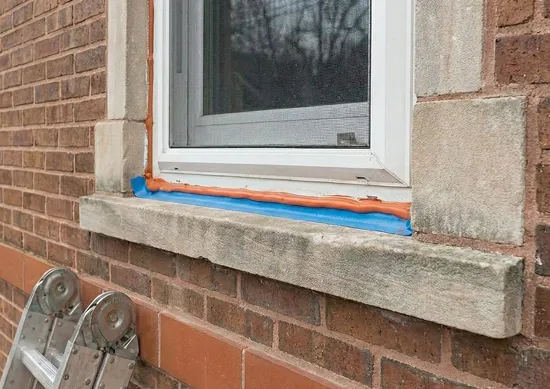
Exterior Air Sealing For Efficient Attic Rodent Removal
Your home is conditioned to the opposite temperature as the exterior, making it an optimal location for rodents and insects to nest.
The exterior is the first line of defense against intrusionas materials and seams of the parameter of the home to prevent infiltration.
The exterior is the first line of defense against intrusionas materials and seams of the parameter of the home to prevent infiltration.
Green Attic Healthy Attic Solutions
Green Attic is committed to providing practical, evidence-based, and sustainable healthy solutions for preventing mice and other rodents from nesting in your crawl space, walls, or attic.
Evaluation of condition of existing insulation. If contaminated old insulation is removed, cleaning and disinfection performed, and new efficient insulation installed.
Upgrade to you attic insulation and enjoy a pest-free, energy efficient home.
Evaluation of condition of existing insulation. If contaminated old insulation is removed, cleaning and disinfection performed, and new efficient insulation installed.
Upgrade to you attic insulation and enjoy a pest-free, energy efficient home.
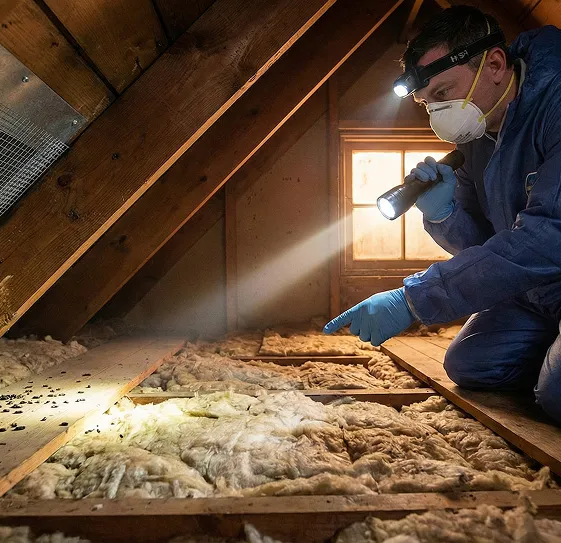
Rodent Nests
Rats, mice, raccoons, squirrels infected with a hantavirus can transmit it via their saliva, urine, and feces. Should their leavings be disturbed they can become airborne, humans inhaling those airborne particles can become quite ill.
For this reason, nests should be removed. Rodents in the United States that carry hantavirus nest in your attic’s fiberglass insulation.
By proactively sealing exterior seams, your home will not be a welcome shelter for pests. Pest control is an ongoing concept. Regular seasonal inspection of dissimilar materials (seams of any material meeting another).
For this reason, nests should be removed. Rodents in the United States that carry hantavirus nest in your attic’s fiberglass insulation.
By proactively sealing exterior seams, your home will not be a welcome shelter for pests. Pest control is an ongoing concept. Regular seasonal inspection of dissimilar materials (seams of any material meeting another).
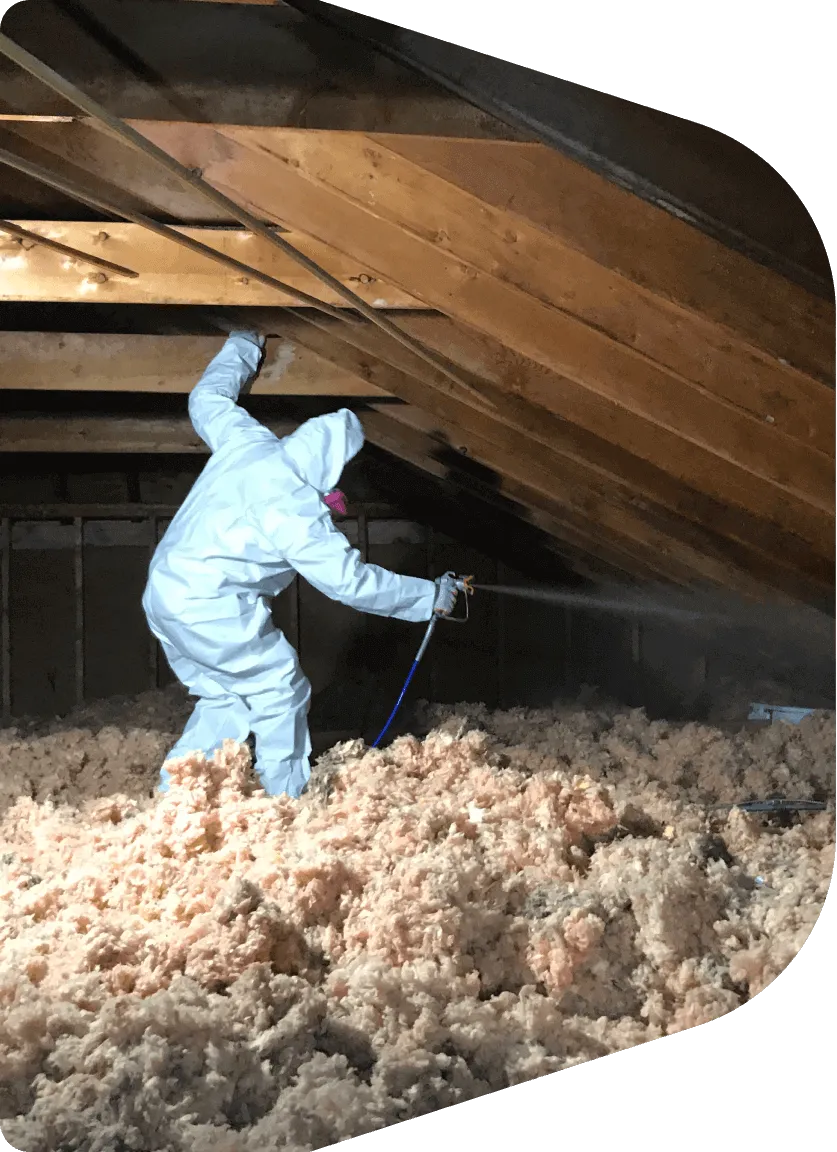

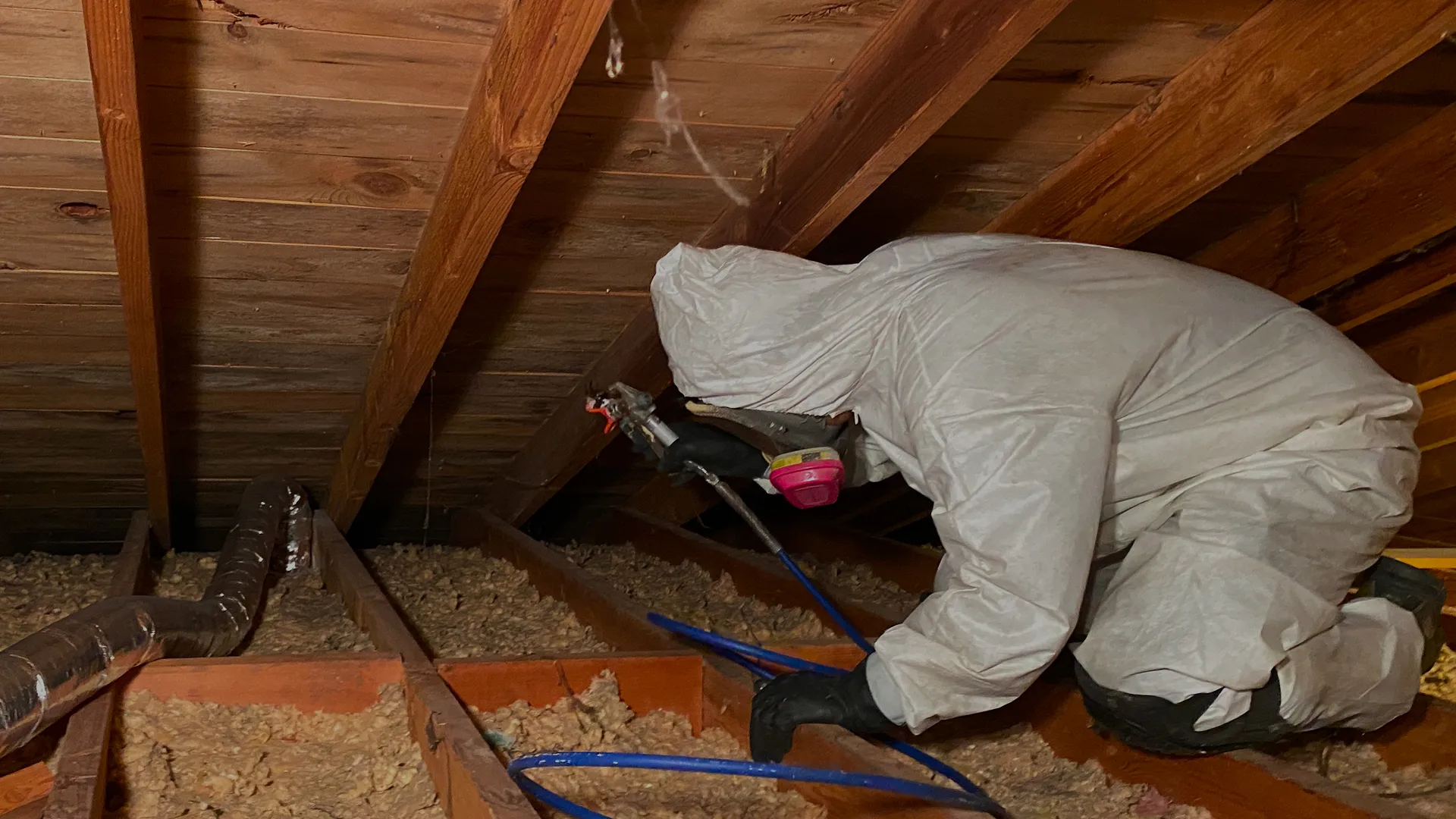
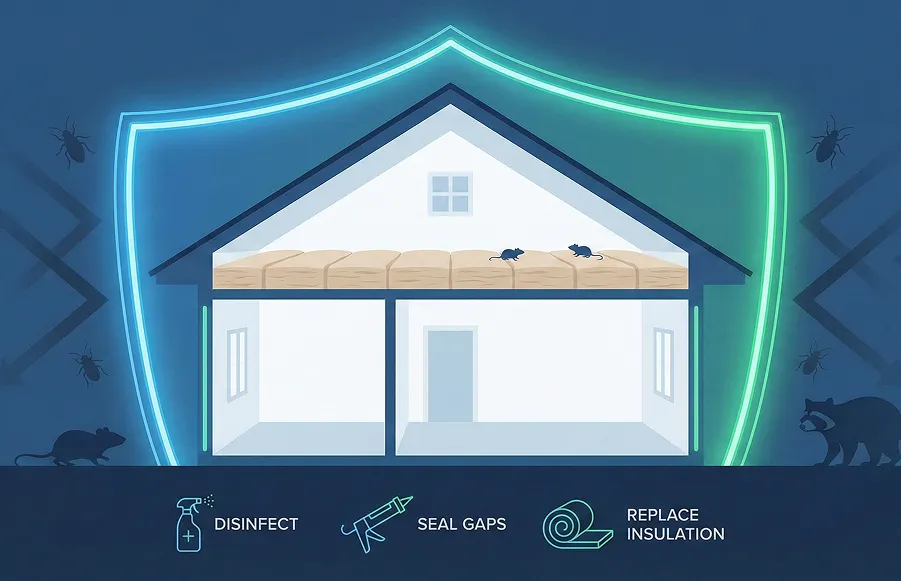
Removing Feces
Droppings with high powered vacuum while leaving the existing insulation in the attic.

Disinfecting
The entire attic to neutralize odors and kill bacteria ( similar to cleaning a rug from dog or cat urine )

Seal exterior penetration
Mice in particular can fit through very small gaps so minding the gaps of the building envelop is crucial to preventing intrusion.

Borate Treated Cellulose
Blowing in premium Class 1 borate-treated cellulose, which is rodent resistant insulation, helps prevent issues such as mice in attic insulation.

Insulate Air
To maximize energy efficiency and prevent air leakage, it is crucial to insulate and properly air seal your hatch cover or pull-down ladder.

Air sealing
Air sealing the attic floor to prevent mice from reaching the attic floor by sealing the penetrations around vent stacks, HVAC, plumbing and electrical penetrations, and framing gaps while the attic floor may be sealed after attic treatment, the mice will still nest in the walls, basement and crawl space if the exterior penetrations are not treated.
Frequently Asked Question
Is it cheaper to DIY or hire an exterminator?
Yes, it is generally cheaper to DIY pest control for small, localized issues because you’re mainly paying for sprays, traps, or bait.
Hiring an exterminator often costs more per visit, but it can be the more cost-effective choice long-term for severe or stubborn infestations, such as termites, rodents, and bed bugs, thanks to expert treatment and guarantees that help prevent costly damage.
If the problem keeps coming back, going pro can save money and reduce overall stress.
Hiring an exterminator often costs more per visit, but it can be the more cost-effective choice long-term for severe or stubborn infestations, such as termites, rodents, and bed bugs, thanks to expert treatment and guarantees that help prevent costly damage.
If the problem keeps coming back, going pro can save money and reduce overall stress.
What pest is most damaging to a house?
Termites are the most damaging pest to a house, but early detection and proactive prevention can protect your home and keep repairs manageable. With regular inspections and early detection, termite damage is highly preventable and manageable.
Rodents, which can chew wiring and increase fire risks, and carpenter ants can also be very destructive, so spotting the early signs makes a big difference in protecting your home.
Rodents, which can chew wiring and increase fire risks, and carpenter ants can also be very destructive, so spotting the early signs makes a big difference in protecting your home.
Will spray foam actually block pest entry points?
Yes, spray foam will block pest entry points because it expands to fill small cracks and gaps, creating a solid, airtight seal. It is a strong deterrent, especially when you use dense closed-cell foam, and it holds up well for sealing most common entry points.
For the best results, pair it with steel wool or wire mesh in larger openings and make sure any existing pest issues are handled first.
For the best results, pair it with steel wool or wire mesh in larger openings and make sure any existing pest issues are handled first.
What materials help deter pests at soffits, eaves, and attic hatches?
Durable materials that work well for deterring pests at soffits, eaves, and attic hatches include 1/4-inch hardware cloth, stainless steel or copper mesh, and metal flashing, all of which help create a snug, long-lasting barrier while still supporting airflow.
Pair these with a tight-fitting hatch and quality sealing around edges for even better overall protection. These materials block rodents and insects while allowing ventilation. For a long-lasting seal, use high-quality silicone caulk and pair it with metal or cement board for a strong, durable finish.
Pair these with a tight-fitting hatch and quality sealing around edges for even better overall protection. These materials block rodents and insects while allowing ventilation. For a long-lasting seal, use high-quality silicone caulk and pair it with metal or cement board for a strong, durable finish.
Are there insulation types that resist nesting better than others in open attics?
Yes, some insulation types naturally resist nesting better in open attics, helping keep the space cleaner and more protected. Borate-treated cellulose helps deter insects and rodents, while closed-cell spray foam offers the strongest protection by curing into a hard, solid barrier that makes it difficult for pests to settle in. Loose-fill fiberglass can be a decent option, but pairing any insulation with good air sealing delivers the best results.
Service Areas
Northwest Suburbs

North Shore
Learn More


