


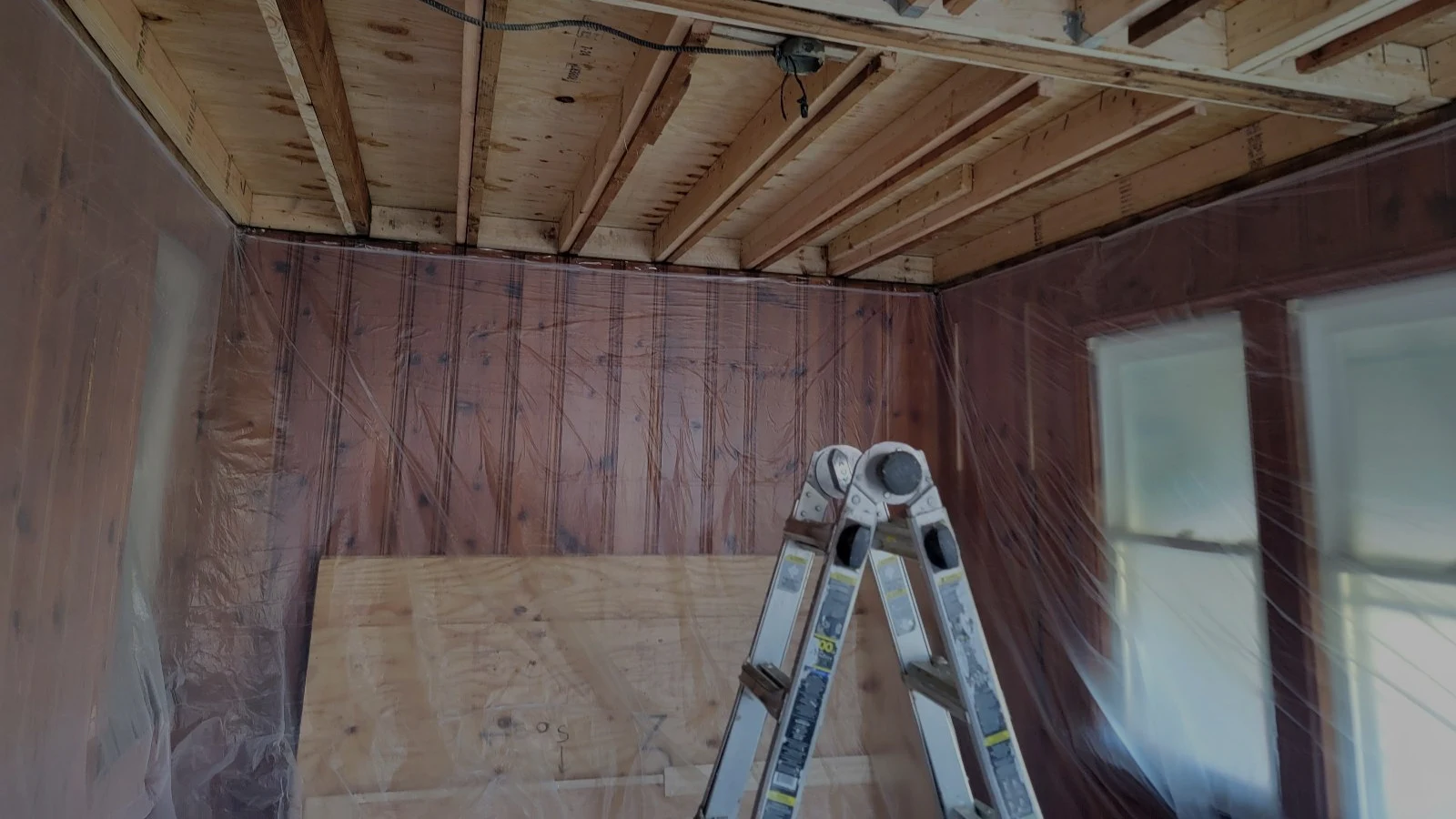
Bungalow Insulation in Chicagoland
Green Attic specializes in insulating historic Chicago bungalows with efficient blown-in solutions that improve comfort, reduce energy waste, and cut utility costs.

Trusted by homeowners for reliable, energy-saving insulation solutions.





Request a Quote Today
Please Fill Out the Form Below
First name *
Last name *
Email *
Phone *
Address, City, State, Zip *
Tell us more about your project
Get a Free Quote



Chicago Bungalow Insulation
According to the Chicago Bungalow Association more than 80,000 bungalows are still standing today, this Chicago housing style represents nearly one-third of the city’s single-family housing stock.
• Brick Construction
• 1-½ Stories Above A Full Basement
• Low-Pitched Hipped Roof (Occasionally Gabled), With Wide Overhangs
• Porch With Steps Ascending From Street Level (Sometimes Side Entrances)
• Generous Windows, Sometimes With Leaded Art Glass
• Simple Style Influenced By The Arts & Crafts Movement
• Rectangular Shape: Narrow At The Front And Rear Ends, Longer On The Sides
• Brick Construction
• 1-½ Stories Above A Full Basement
• Low-Pitched Hipped Roof (Occasionally Gabled), With Wide Overhangs
• Porch With Steps Ascending From Street Level (Sometimes Side Entrances)
• Generous Windows, Sometimes With Leaded Art Glass
• Simple Style Influenced By The Arts & Crafts Movement
• Rectangular Shape: Narrow At The Front And Rear Ends, Longer On The Sides
Get a Free Consultation

Long-Term Protection for Your Bungalow

Comprehensive Warranty On Materials

10 Years Warranty On Labor

5 Years Warranty On Mold Treatment

Reported Utility Bills Savings Up To 30%
Adding Cellulose Insulation to The Attic and Empty Wall Cavities and Air Sealing The Attic Floor
A properly insulated and air sealed home will prevent drafts from the first floor and cold tile and wood floors and prevent heat escape through the walls and ceiling framing gaps in winter.

✓ Vented Clean Fresh Air In Kneewall
✓ Vented Attic With Solar Fan And Passive Vent Intake
✓ Stop Condensation In The Kneewalls
✓ Vented Attic With Solar Fan And Passive Vent Intake
✓ Stop Condensation In The Kneewalls
Bungalow Insulation Means These Areas Are Treated
This is the best way to insulate a bungalow. there are choices for insulation of these surfaces like closed cell spray foam and cellulose insulation blown in.
This prevents condensation and mold growth issues in the open space between the roof deck and conditioned space walls.
✓ Floor Of Space Below
✓ Knee Wall / Vertical Wall
✓ Ceiling Vault
✓ Attic Insulation
This prevents condensation and mold growth issues in the open space between the roof deck and conditioned space walls.
✓ Floor Of Space Below
✓ Knee Wall / Vertical Wall
✓ Ceiling Vault
✓ Attic Insulation
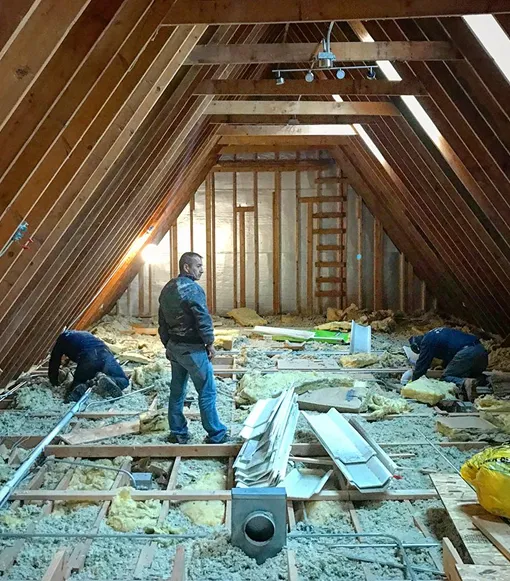
Common Bungalow Summer And Winter Problems
The thin framing behind exterior brick does not leave a lot of space for insulation between studs / framing. Attic insulation is below current standards.
The 1-½ stories above a full basement and low-pitched hipped roof (occasionally gabled), with wide overhangs make it difficult to achieve R49-60 value with limited space for insulation
✕ Thin Brick Cold Walls
✕ Moisture Problems
✕ Too Hot In The Summer
✕ Too Cold In The Winter
✕ Icicles / Ice Dams
✕ Heat In Close Proximity To Roof Snow
The 1-½ stories above a full basement and low-pitched hipped roof (occasionally gabled), with wide overhangs make it difficult to achieve R49-60 value with limited space for insulation
✕ Thin Brick Cold Walls
✕ Moisture Problems
✕ Too Hot In The Summer
✕ Too Cold In The Winter
✕ Icicles / Ice Dams
✕ Heat In Close Proximity To Roof Snow
Frequently Asked Question
How to insulate a bungalow floor?
Insulating a bungalow floor generally involves filling gaps between suspended floor joists with mineral wool supported by netting or laying rigid foam boards over concrete, which is usually accompanied by a vapor barrier to prevent moisture buildup.
For suspended timber floors, fill the space between joists with mineral wool (supported with netting or a breathable membrane) and seal gaps, while keeping air bricks or vents clear for healthy airflow.
For concrete floors, install a damp-proof membrane, rigid foam board, and the finished flooring on top for a warmer, drier feel underfoot.
For suspended timber floors, fill the space between joists with mineral wool (supported with netting or a breathable membrane) and seal gaps, while keeping air bricks or vents clear for healthy airflow.
For concrete floors, install a damp-proof membrane, rigid foam board, and the finished flooring on top for a warmer, drier feel underfoot.
Will adding insulation make my bungalow house cooler in the summer as well, or will it trap heat and make things worse without proper attic ventilation?
Yes, adding insulation to your bungalow house will make it cooler in summer and will not trap heat as long as it is installed properly. Insulation acts as a thermal barrier that slows heat transfer, maintaining the 120°F+ air in your attic from escaping into your ceiling and retaining cool air from your AC.
Can insulation be added without damaging the character of my historic bungalow, or will I have to tear open walls and ceilings?
Yes, insulation can often be added to a historic Chicago bungalow without tearing open walls or ceilings, so you can preserve original plaster and woodwork.
Common low-impact options include dense-pack blown-in insulation installed from the exterior (through siding or mortar joints on brick) as well as upgrades from the attic, basement, or crawl space, so you can improve comfort and efficiency while keeping interior finishes intact.
A contractor experienced with older homes will also choose “breathable” materials and details that protect the home’s long-term durability.
Common low-impact options include dense-pack blown-in insulation installed from the exterior (through siding or mortar joints on brick) as well as upgrades from the attic, basement, or crawl space, so you can improve comfort and efficiency while keeping interior finishes intact.
A contractor experienced with older homes will also choose “breathable” materials and details that protect the home’s long-term durability.
Will insulating my bungalow solve temperature issues without needing to replace my HVAC system or add ductwork?
Yes, insulating a bungalow can, in many cases, solve common hot or cold room issues without replacing your HVAC or adding ductwork because it addresses the root cause: heat loss and air leakage.
A well-insulated home lets your current system work more efficiently, reducing drafts and temperature swings. If you have ducts in unconditioned areas, simply insulating and sealing them can boost comfort further.
A well-insulated home lets your current system work more efficiently, reducing drafts and temperature swings. If you have ducts in unconditioned areas, simply insulating and sealing them can boost comfort further.
What insulation works best for a Chicago bungalow: cellulose, fiberglass, mineral wool, or spray foam?
The insulation type that works best for a Chicago bungalow is closed-cell spray foam because it delivers the strongest air sealing, moisture resistance, and the highest R-value per inch, making it ideal for drafty attic rooflines, knee walls, and rim joists.
Blown-in cellulose is cost-effective, eco-friendly, and excellent for filling tight, irregular spaces in bungalow rooflines.
Mineral wool has excellent soundproofing and does not lose R-value when damp unlike fiberglass.
Fiberglass can also work well when paired with good air sealing, making it a solid, budget-friendly option in the right areas.
Blown-in cellulose is cost-effective, eco-friendly, and excellent for filling tight, irregular spaces in bungalow rooflines.
Mineral wool has excellent soundproofing and does not lose R-value when damp unlike fiberglass.
Fiberglass can also work well when paired with good air sealing, making it a solid, budget-friendly option in the right areas.
Can insulation be added safely to brick bungalows without trapping moisture behind masonry?
Yes, insulation can be added safely to brick bungalows without trapping moisture behind the masonry, as long as the wall assembly is designed to remain vapor-open and able to dry. The best and safest approach is exterior wall insulation, which keeps the brick warmer and drier.
For interior upgrades, contractors typically use breathable, capillary-active materials such as mineral wool or wood fiber rather than impermeable layers that can trap moisture against cold masonry.
Paired with effective exterior water management (gutters/drainage) and sensible ventilation, this approach improves comfort while protecting the brick in the long term.
For interior upgrades, contractors typically use breathable, capillary-active materials such as mineral wool or wood fiber rather than impermeable layers that can trap moisture against cold masonry.
Paired with effective exterior water management (gutters/drainage) and sensible ventilation, this approach improves comfort while protecting the brick in the long term.
Service Areas
Northwest Suburbs

North Shore
Learn More


