


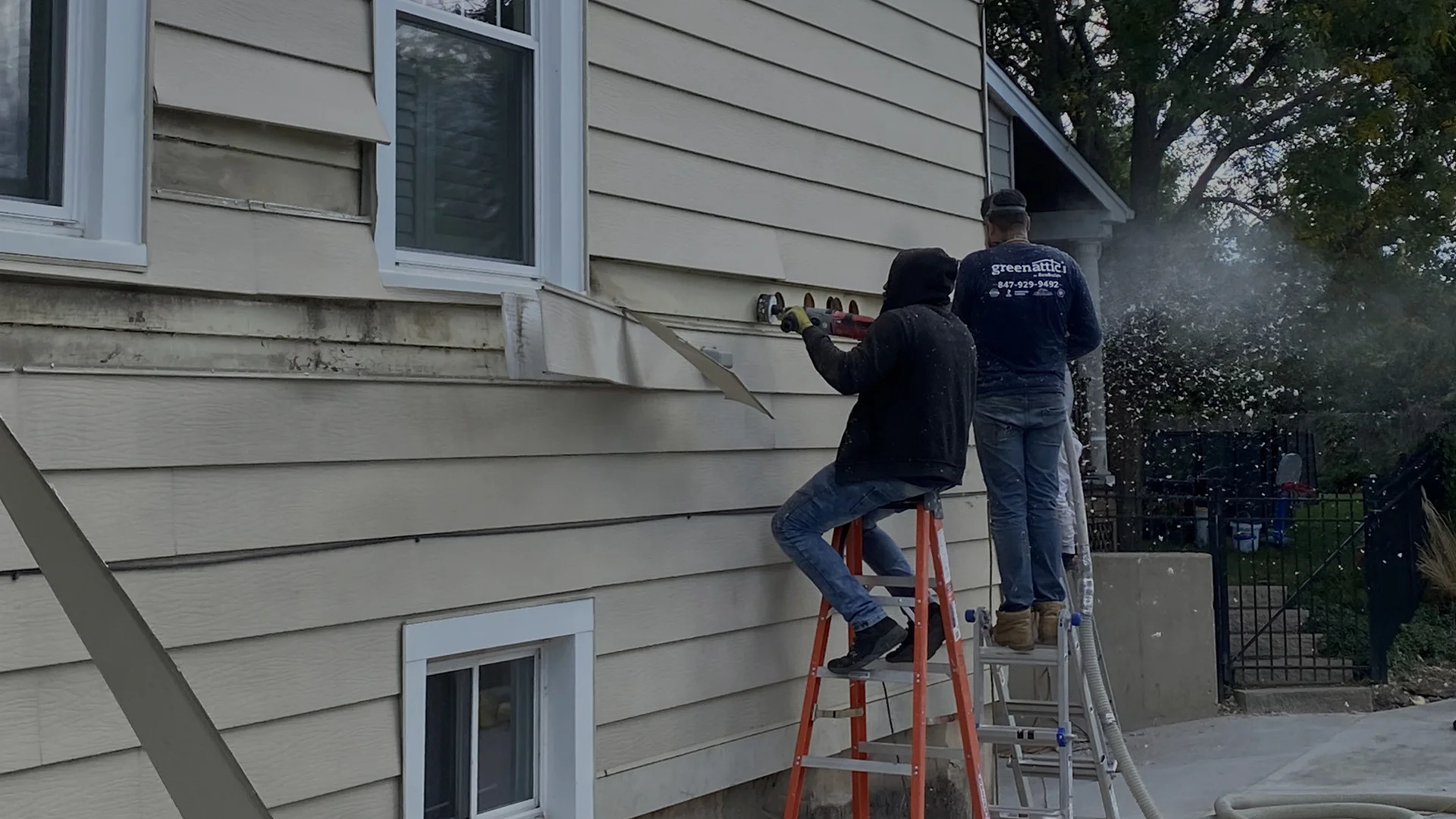
Home Insulation in Chicagoland
At Green Attic in Chicago, we understand that proper whole-house insulation is essential for year-round comfort, lower energy bills, and a healthier indoor environment.

Trusted by homeowners for reliable, energy-saving insulation solutions.




Request a Quote Today
Please Fill Out the Form Below
First name *
Last name *
Email *
Phone *
Address, City, State, Zip *
Tell us more about your project
Get a Free Quote



What is Home Insulation?
Home insulation is a crucial component for energy-efficient living. It acts as a barrier, reducing heat loss in winter and heat gain in summer between the interior of your home and the external environment. By sealing air leaks and properly insulating areas like walls, attics, and crawl spaces, homeowners can save up to 30% on heating and cooling costs.
Not only does insulation enhance energy efficiency, but it also ensures comfort by minimizing drafts and limiting CO2 emissions. It involves installing materials such as fiberglass, cellulose, foam, or reflective insulation in walls, floors, ceilings, and attics.
Not only does insulation enhance energy efficiency, but it also ensures comfort by minimizing drafts and limiting CO2 emissions. It involves installing materials such as fiberglass, cellulose, foam, or reflective insulation in walls, floors, ceilings, and attics.
Get a Free Quote
How House Insulation Works?
There are multiple kinds of insulation that work if you are looking to
insulate your ceiling.
Cellulose Insulation
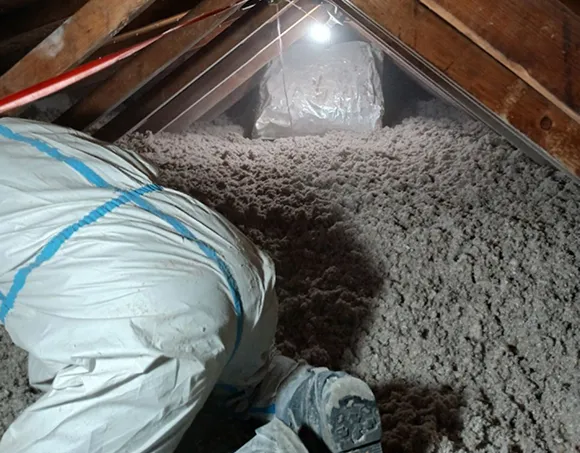
Besides saving you money, cellulose insulation also provides extremely effective fire protection capabilities. Tests conducted by Underwriters Laboratories Inc.® show that Cellulose insulation provides an effective 1 hour fire rating.
This will slow the spread of a fire allowing you more time to escape any danger. This is because cellulose is specially treated using Borate Compound Chemicals as a fire retardant in the manufacturing process to meet or exceed all fire safety requirements.
This will slow the spread of a fire allowing you more time to escape any danger. This is because cellulose is specially treated using Borate Compound Chemicals as a fire retardant in the manufacturing process to meet or exceed all fire safety requirements.

Frequently Asked Question
How do I know if my house needs more insulation?
Your house likely needs more insulation when you want steadier comfort and better efficiency, such as fewer drafts, more even room-to-room temperatures, and energy bills that feel more in line with your home. If floors and walls feel chilly in winter or certain rooms run warm in summer, adding insulation can be a high-impact upgrade that helps the whole house feel more balanced.
A quick attic check is a great starting point: if you can see the tops of the floor joists or the insulation looks thin/uneven, adding more can make a noticeable comfort difference. For extra confidence, a simple home energy audit or infrared scan can pinpoint exactly where upgrades will help most.
A quick attic check is a great starting point: if you can see the tops of the floor joists or the insulation looks thin/uneven, adding more can make a noticeable comfort difference. For extra confidence, a simple home energy audit or infrared scan can pinpoint exactly where upgrades will help most.
What energy savings can homeowners expect from proper house insulation?
Homeowners can expect energy savings from proper house insulation, with reduced heating and cooling costs by up to 15%-20%. Some studies also indicated potential savings of up to 35%-40% for specific upgrades, such as attic insulation.
These upgrades usually result in a 10% reduction in total annual energy costs. Beyond the bill savings, good insulation makes rooms feel more even and comfortable, cuts drafts and noise, and can add long-term value to the home.
These upgrades usually result in a 10% reduction in total annual energy costs. Beyond the bill savings, good insulation makes rooms feel more even and comfortable, cuts drafts and noise, and can add long-term value to the home.
Which insulation types work best for whole-house applications like floors and attics?
The insulation types that work best for attics are blown-in cellulose or fiberglass as they cover joists well, install quickly, and deliver strong comfort and value. Spray foam is ideal for maximum air sealing and draft control.
For floors and crawl spaces, fiberglass batts work well between joists, while rigid foam board is great on concrete/foundation areas for added moisture resistance, and spray foam shines at rim joists to stop air leaks. The best setup often combines materials to match each area’s needs for comfort, efficiency, and durability.
For floors and crawl spaces, fiberglass batts work well between joists, while rigid foam board is great on concrete/foundation areas for added moisture resistance, and spray foam shines at rim joists to stop air leaks. The best setup often combines materials to match each area’s needs for comfort, efficiency, and durability.
Is blown-in insulation a good option for older Chicago homes with plaster walls?
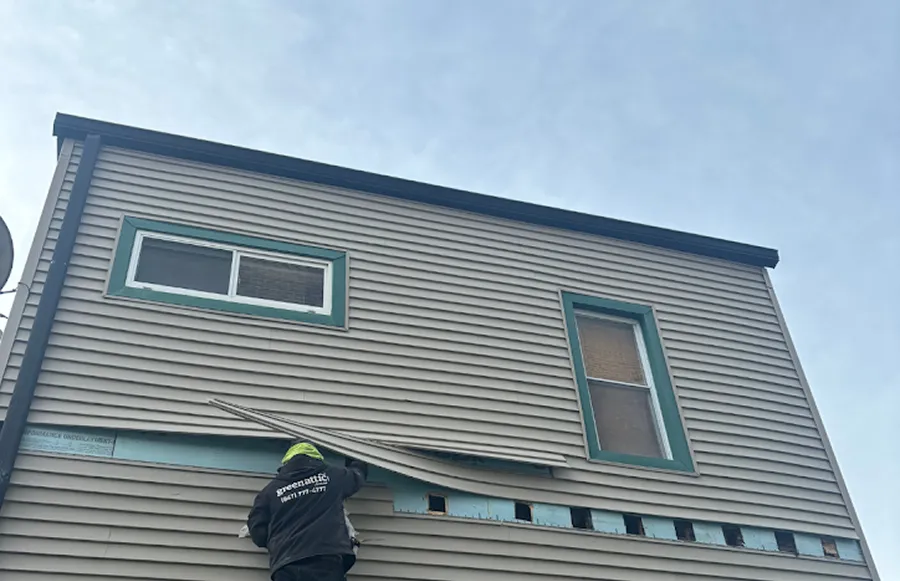
Yes, blown-in insulation is a good option for older Chicago homes with plaster walls because it fills irregular wall cavities without a full renovation and can noticeably improve comfort and sound control. It’s typically installed from the exterior through small access holes, which helps preserve your interior plaster while upgrading comfort and efficiency.
What is the best insulation plan for a classic Chicago bungalow, two-flat, or brick home with a drafty second floor?
The best insulation plan for a classic Chicago bungalow, two-flat, or brick home with a drafty second floor is often a “hot roof” strategy using closed-cell spray foam, which delivers excellent air-sealing and high R-value in tight, hard-to-insulate roofline areas.
This strategy starts with air sealing, then upgrades the attic/roofline and knee walls, which are key areas that have the biggest impact on reducing drafts and improving second-floor comfort. In tight sloped-ceiling areas, closed-cell spray foam delivers high R-value and excellent draft control, while knee walls do great with mineral wool batts plus rigid foam board on the attic side to create a continuous air barrier.
This strategy starts with air sealing, then upgrades the attic/roofline and knee walls, which are key areas that have the biggest impact on reducing drafts and improving second-floor comfort. In tight sloped-ceiling areas, closed-cell spray foam delivers high R-value and excellent draft control, while knee walls do great with mineral wool batts plus rigid foam board on the attic side to create a continuous air barrier.
What is the best approach for insulating a finished attic or finished walls in Chicago without major demolition?
The best no-demolition approach for insulating finished attics and walls in Chicagoland is using injection foam or blown-in cellulose or fiberglass, which only requires small holes for installation. For finished attics, closed-cell spray foam is an excellent choice for sealing complex, angled spaces, while drill-and-fill injection foam is a great fit for upgrading exterior wall cavities with minimal disruption.
Are there Chicago or Illinois rebates or utility incentives that can reduce insulation costs?
Yes, there are numerous incentives that reduce insulation costs in Chicago and Illinois. Local utility companies like Nicor Gas and Peoples Gas also offer significant rebates for insulation and air sealing, while programs like IHWAP and Green Homes Chicago provide assistance for income-eligible households. (Federal energy tax credits ended December 31, 2025.)
Service Areas
Northwest Suburbs

North Shore
Learn More


