
The Real Decision Before Foam
Spray foam roof insulation can make a difficult attic more comfortable. It can also cause expensive problems when used in the wrong attic design. The real question isn’t “Is foam good?” but rather “Does this attic support roofline foam?”
At Green Attic, we don’t start with foam. We actually start with the attic design. If the attic should be brought inside the home’s conditioned space, spray foam may be a strong option. However, if the attic should stay vented, roofline foam may be the wrong move.
That is the honest answer most homeowners need before they spend money.
What Homeowners Usually Mean by Spray Foam Roof Insulation
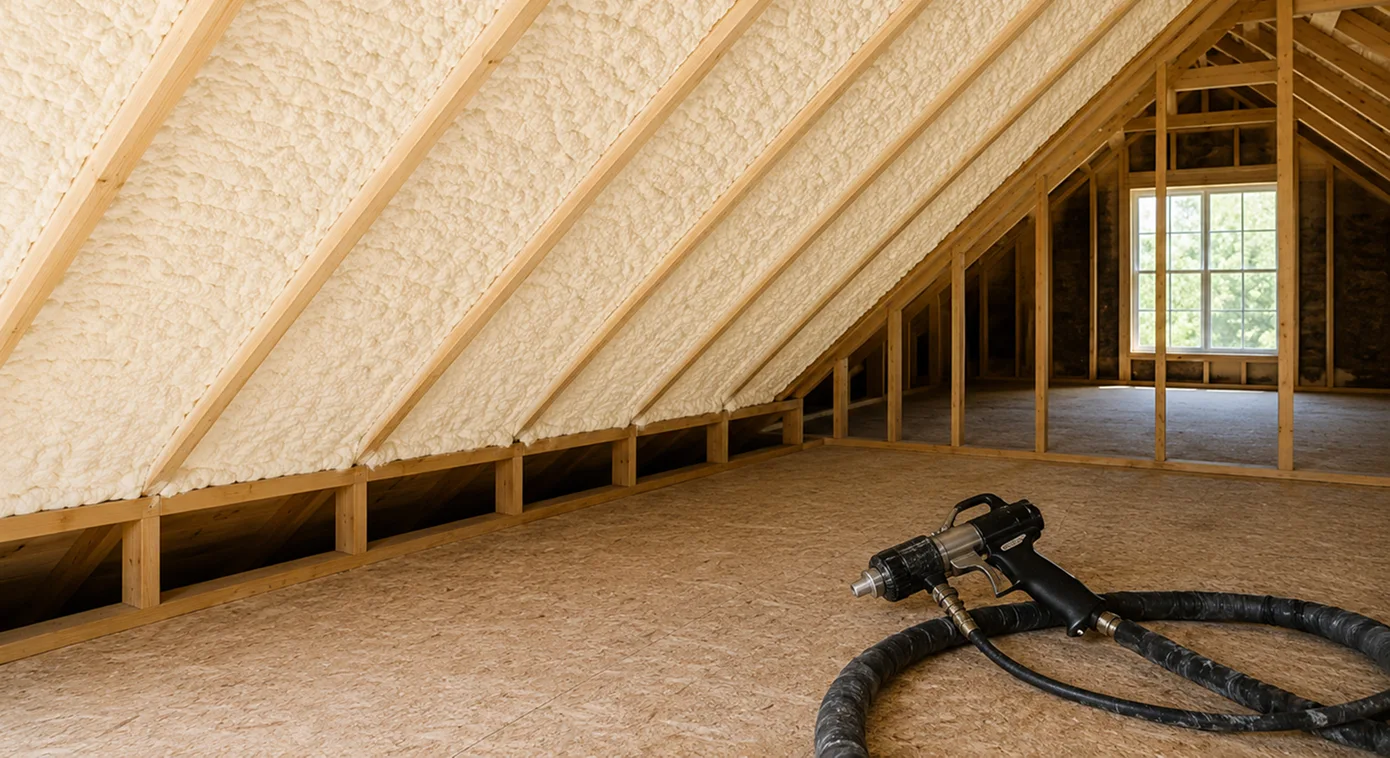
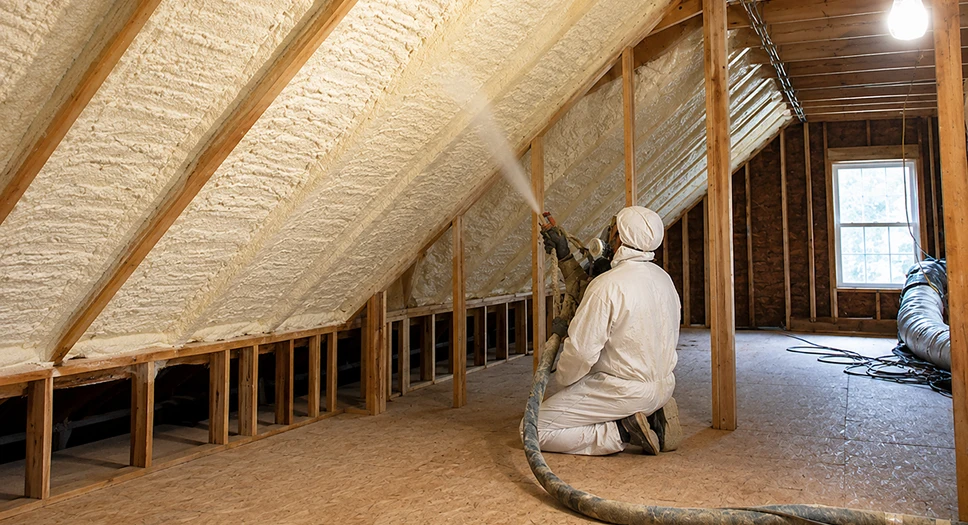
Most homeowners use the phrase “spray foam roof insulation” to mean that the foam is installed inside the attic, usually against the underside of the roof deck. This moves the insulation layer from the attic floor to the roofline.
That’s not the same as exterior spray foam roofing. Exterior SPF roofing is a roof surface system that goes on top of a roof and needs a protective coating. Here, we’re talking about residential spray foam inside the attic or along the roofline.
The distinction matters because the risks are different. Interior roofline foam changes how the attic dries and how the roof deck behaves in winter. It also changes the way moisture moves through the home.
The Roof Deck Has to Be Checked First
The roof deck is the surface that the spray foam will touch. If that deck is dry and stable, then foam can create a strong air seal near the roofline. If the deck is wet or leaking, foam can hide the problem.
.png)
Before spray foam roof insulation makes sense, your contractor should be able to answer two questions:
- Is the roof deck dry enough for foam?
- How will the roof deck dry if moisture gets in later?
If either answer is vague, stop there. The attic needs more evaluation before anyone starts spraying foam.
This is especially important in Chicagoland because cold roof decks and indoor humidity can create condensation risk during winter.
Open-Cell and Closed-Cell Foam Are Not Interchangeable
Open-cell spray foam and closed-cell spray foam behave differently below a roof deck. The right choice depends on the roof design and moisture plan.
R-value depends on the foam used and how much is installed. A high R-value job can still fail if the roof deck cannot dry.
The Moisture Concern Is Not a Myth
Homeowners often worry that spray foam can trap water. That concern is valid when the roof has an active leak or damp sheathing. Poor indoor humidity control can also create problems when the roof deck has no clear drying path.
In a vented attic, outside air moves below the roof deck and helps carry moisture away. In an unvented spray foam attic, the roof deck is insulated from below. That can work, but the design has to control condensation.
Problems usually start when foam is used to cover uncertainty. Roof stains and bad bath-fan exhaust should be addressed before foam is installed. Possible roof leaks need to be ruled out first.
Spray foam is not the inspection, but it’s actually the product used after the inspection supports it.
Sun Heat Can Push Moisture Into the Roof Assembly
In summer, a hot roof surface can push moisture inward through the roof assembly. That‘s one reason spray foam under the roof deck needs a real moisture plan, not just a high R-value number.
Not only can closed-cell foam limit vapor movement, but it can also reduce the roof deck’s ability to dry inward. Open-cell foam allows more vapor movement, which can become a problem when indoor humidity is not controlled.
But this does not mean foam roof insulation is always risky. It just means the attic and roof deck need to be reviewed before foam is sprayed.
Ask About Odor Before Installation
Spray foam is mixed at the job site. That means the installer and setup matter as much as the product.
Some homeowners are sensitive to odor after installation. The contractor should explain the product being used and the re-entry guidance before the job starts. A “spray today and hope it is fine” approach isn’t a plan.
Good spray foam work starts before installation day.
Where Spray Foam Roof Insulation Can Make Sense
Spray foam roof insulation can be useful when attic-floor insulation alone cannot solve the roofline problem.
It may fit vaulted ceilings and finished attic spaces because those areas often have limited room for insulation. It may also fit difficult roofline cavities where air leakage is the main comfort problem.
Spray foam under the roof deck can also be part of a metal roof insulation plan when condensation below the roof surface is the main concern. In that case, the roof surface and attic conditions need to be reviewed together.
For many homes, the best answer is targeted foam rather than foam everywhere.
Where Spray Foam Is the Wrong Shortcut
Spray foam shouldn’t be used to hide a roof problem. It shouldn’t be used because the contractor wants one product to solve every attic.
Be careful if the attic has visible roof stains or suspected storm leaks. Unsafe wiring and old insulation should also be evaluated before foam is considered.
A good contractor should be willing to say “Not yet.” In some homes, the first step is roof repair. In others, attic-floor air sealing or ventilation correction needs to happen before new insulation goes in.
The best insulation plan is the one that fits the house and not the one that sounds most expensive.
What Green Attic Checks Before Recommending Foam
Green Attic checks the roof deck and attic access before recommending spray foam roof insulation. We also look at how the attic is currently insulated and how air moves through the space. Moisture warning signs can change the plan before any foam is installed.
In older Chicago homes, we may also need to account for vermiculite or visible wiring concerns before the attic is disturbed.
The final recommendation may be closed-cell spray foam. It may also be a vented attic-floor upgrade or another foam roof insulation strategy entirely.
Questions to Ask Before You Approve Spray Foam
Before you sign a spray foam roof insulation quote, ask direct questions.
- Is the foam open-cell or closed-cell?
- What R-value will the roofline reach?
- What happens if the roof deck shows moisture?
- What ignition barrier or thermal barrier is required?
The answers should be clear. If the contractor cannot explain the roof deck condition and moisture plan, then the quote is incomplete.
About Green Attic Insulation
Green Attic Insulation helps Chicagoland homeowners decide when spray foam belongs near the roofline and when the attic floor is the better insulation location. Our team starts with an attic inspection because foam applied under a roof deck only performs well when the roof conditions support it.
If spray foam isn’t the right fit, we explain the better path. That may mean improving the attic floor first or correcting the airflow before any foam is used.
The result should be a roof and attic plan that improves comfort without hiding moisture problems.
FAQ
What is spray foam roof insulation?
Spray foam roof insulation is spray polyurethane foam installed near the roofline to reduce heat movement and air leakage. Spray foam roof insulation is usually applied to the underside of the roof deck or inside roofline cavities.
Is spray foam roof insulation good for Chicago homes?
Spray foam roof insulation can be good for Chicago homes when the roof deck is dry and the moisture plan is correct. Spray foam roof insulation needs a cold-climate review before it is installed under the roof deck.
Can spray foam roof insulation trap moisture?
Spray foam roof insulation can trap moisture when it covers a damp roof deck or hides an active roof leak. Spray foam roof insulation is safer when the roof condition is checked before installation.
Is closed-cell spray foam better under a roof deck?
Closed-cell spray foam is often better under a roof deck when the project needs a higher R-value per inch and stronger vapor control. The roof deck still has to be dry before closed-cell spray foam is installed.
Should I spray foam the roofline or insulate the attic floor?
You should spray foam the roofline when the attic becomes part of the conditioned space. You should insulate the attic floor when the attic stays vented so the roof deck can dry normally.
How much does spray foam roof insulation cost?
Spray foam roof insulation cost depends on the roofline area and project complexity. The cost can also change when roof access is difficult or when moisture repair is needed first. For a full 2026 price breakdown, see our guide: How Much Does Spray Foam Insulation Cost in 2026?

Share with the world