Key Takeaways
- R49 insulation provides a thermal resistance rating of 49. It's commonly used in attics to reduce heat transfer.
- R49 insulation thickness varies by material. Fiberglass batts are typically 13.5–15 inches thick, while blown-in products have different depth requirements.
- R49 vs R60: R60 offers greater thermal resistance, but adding more insulation isn't always the most worthwhile improvement.
- Check your attic first. Existing insulation should be assessed before adding more. Air leaks and moisture problems may need attention.
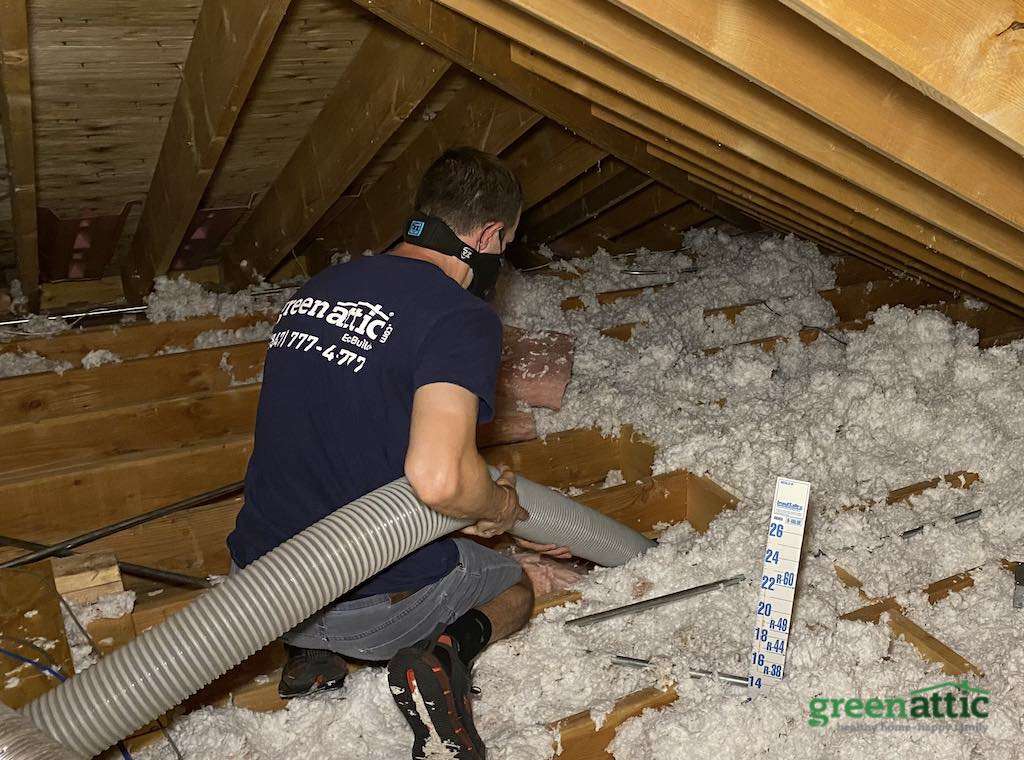
R49 insulation is about 13 to 16.5 inches thick, depending on the material. Fiberglass batts are typically 13.5–15 inches thick, blown-in cellulose needs about 14.3 inches, and blown-in fiberglass about 16.4 inches. Closed-cell spray foam can reach R49 in roughly 7–9 inches.
The difference comes from how R-value works. R49 isn't a thickness. It's a measure of thermal resistance, and every material resists heat at a different rate per inch. At the right level, R49 helps keep your home comfortable through Chicago's cold winters and cuts the energy wasted through the attic ceiling.
The condition of your attic matters too. Even a thick layer of insulation may not perform as expected if there are large gaps or unsealed openings in the ceiling.
What Is R49 Insulation?
R49 insulation is insulation with a thermal resistance rating of R-49. R-value measures how well a material resists heat flow. The higher the number, the greater its thermal resistance.
In a typical vented attic, insulation sits above the ceiling. It separates the conditioned living space from the attic, where temperatures can differ considerably from those inside the home.
R49 can be achieved with fiberglass, cellulose or certain spray foam products. Each material has its own installation requirements.
One detail worth understanding is that R49 can describe the insulation being added or the total insulation level after installation. If your attic already has insulation, that existing material contributes to the final R-value as long as it's in suitable condition.
How Thick Is R49 Insulation?
R49 insulation is approximately 14 inches thick for a common fiberglass batt, but other materials require different depths.
The thickness needed to achieve R49 depends on how much thermal resistance the selected material provides per inch.
R49 Insulation Thickness Chart
| Insulation Material | Approximate R49 Thickness |
| Blown-in cellulose | 14.3 inches initially; 13.3 inches settled |
| Blown-in fiberglass | 16.4 inches |
| Fiberglass batt | 13.5–15 inches (14 inches is most common) |
| Open-cell spray foam | Approximately 12–14 inches |
| Closed-cell spray foam | Approximately 7–9 inches |
Thickness varies by product. Check the manufacturer's specifications before installation.
R49 Blown-In Cellulose Insulation Thickness
Blown-in cellulose is commonly used for attic upgrades because it can fill spaces around ceiling joists that are difficult to reach with standard batts.
Greenfiber Sanctuary cellulose, for example, requires an initial loose-fill thickness of 14.3 inches to achieve R49. Its minimum settled thickness is 13.3 inches.
Cellulose can settle after installation. The manufacturer's coverage chart accounts for this and specifies how much material must be installed.
Using the correct amount is important. Measuring the depth immediately after installation doesn't necessarily confirm that the insulation will maintain its rated performance.
Learn more about our cellulose insulation services.
R49 Blown-In Fiberglass Insulation Thickness
Blown-in fiberglass generally needs more depth than cellulose to achieve R49.
For example, Knauf Performance+ Jet Stream Ultra specifies 16.375 inches of installed thickness for R49.
Other fiberglass products may require a different depth. The manufacturer's coverage chart should determine the amount installed.
R49 Fiberglass Batt Thickness

Most R49 fiberglass batts are 13.5 to 15 inches thick, depending on the brand. A 14-inch batt is the most common size.
Unlike blown-in insulation, batts come in fixed dimensions. They need to fit the framing without compression or gaps that could reduce their effectiveness.
For an existing attic with irregular framing, blown-in insulation may be easier to install evenly.
R49 Spray Foam Thickness
Spray foam can achieve R49 with less thickness than most loose-fill materials.
Closed-cell spray foam generally provides more thermal resistance per inch than open-cell foam. The exact depth depends on the product's rated performance.
Installing spray foam against the roof deck requires particular care. The contractor needs to determine how the assembly will handle moisture and whether the attic should remain vented. Fire-protection requirements must also be followed.
How R49 Insulation Reduces Heat Loss

R49 insulation reduces heat loss by slowing heat movement through the ceiling.
During winter, heat naturally moves toward colder areas. In a poorly insulated home, some of that heat passes through the ceiling into the attic.
In summer, the attic can become much hotter than the living space below. Insulation limits the heat that moves in the opposite direction.
Homes with insufficient attic insulation may see a noticeable improvement after an upgrade. Upstairs rooms can also become easier to keep at a consistent temperature.
However, insulation doesn't automatically stop air leaks.
Openings around plumbing pipes or attic access hatches can allow heated air to escape. Sealing these gaps before adding insulation addresses a separate source of energy loss.
Our attic air sealing services focus on these openings, which can be difficult to access once new insulation covers the attic floor.
Is R49 Insulation Worth the Investment?

R49 insulation can be worth the investment when an attic has too little insulation. The potential savings depend on how much heat the home currently loses through its ceiling.
An attic with exposed joists and uneven insulation coverage has more room for improvement than one that already contains a consistent layer of R49.
Some projects also need preparation before new insulation can be added.
Wet or damaged insulation may need to be removed. Significant air leaks should also be sealed first.
The amount of work required affects the final price, particularly in older homes where attic access may be difficult.
For more information on installation expenses, see our attic insulation cost guide.
Is R60 Insulation Better Than R49?
R60 insulation is better than R49 at resisting heat flow, but that doesn't automatically make it the better investment.
Adding more insulation reduces heat transfer. However, the additional benefit becomes smaller as the total R-value increases.
For example, an attic that already has consistent R49 insulation may benefit more from sealing major air leaks than adding another layer.
Comparing R38, R49 and R60
| R-Value | What It Means |
| R38 | Lower thermal resistance than R49; may be suitable for certain existing assemblies |
| R49 | Higher thermal resistance; commonly considered for attic upgrades |
| R60 | Greater thermal resistance than R49; often recommended for cold-climate attics |
According to ENERGY STAR's insulation recommendations, an uninsulated attic in Climate Zone 5 should receive R60 insulation.
For an attic with approximately 3–4 inches of existing insulation, its retrofit guidance recommends adding R49.
These recommendations account for different starting conditions. The amount being added isn't necessarily the same as the attic's final total R-value.
Before deciding between R49 and R60, check how much insulation your attic already has.
Benefits of Blown-In R49 Insulation

Blown-in insulation is often a practical choice for existing attics, especially where fiberglass batts would be difficult to fit around framing.
It can cover irregular spaces and be installed to the required depth. In many cases, compatible blown-in material can also be added over existing insulation without removing the original layer.
Both cellulose and fiberglass can achieve R49 when installed according to their specifications.
Blown-in insulation isn't a substitute for air sealing, though. It also doesn't act as a second vapor barrier.
Roof leaks must be repaired before insulation is installed. Moisture problems shouldn't simply be covered with additional material.
For vented attics, the finished insulation must also leave the intended ventilation openings clear.
How Much Attic Insulation Is Enough?
The amount of attic insulation that's enough for your home depends on its existing R-value and the level recommended for your climate.
One quick check is to look across the attic floor. If you can clearly see the tops of the ceiling joists above the insulation, you may need more.
Uneven coverage near the roof edges is another common issue.
Before installing additional material, check the following:
- Existing insulation: Identify the material and check its condition. Wet or damaged insulation may need to be removed.
- Air leaks: Seal openings around ceiling penetrations and the attic hatch.
- Ventilation: Keep soffit vents open. Baffles may be needed to maintain airflow along the roof edges.
- Installation depth: Follow the manufacturer's specifications for the material being installed.
Older insulation may also need special attention. Vermiculite, for example, can contain asbestos and should not be disturbed until it has been properly evaluated.
If you don't know your attic's existing R-value, a home energy assessment can help identify areas that need attention.
R49 Attic Insulation in Chicago
Chicago's cold winters make attic insulation particularly important. In older homes with inadequate insulation, heat loss through the ceiling can increase heating demand.
R49 can be suitable for certain attic upgrades, but it isn't automatically the final insulation level every Chicago home needs.
Consider an older attic with a thin layer of fiberglass insulation. Adding blown-in material may improve its thermal resistance without requiring the original insulation to be removed.
An attic with moisture damage is a different situation. The underlying problem should be corrected before new insulation is installed.
Ventilation also needs attention. Adding insulation doesn't inherently reduce attic airflow, but material that blocks soffit vents can cause problems.
Some Chicago-area homeowners may also qualify for utility rebates when upgrading their attic insulation. Eligibility depends on the applicable program and the home's existing insulation level.
You can review available insulation rebates to see which programs may apply to your project.
At Green Attic Insulation, we help homeowners throughout Chicago and the surrounding suburbs evaluate their attic insulation before deciding on an upgrade.
Our attic insulation installation services include options for homes with inadequate or aging insulation.
Frequently Asked Questions About R49 Insulation
How Many Inches Is R49 Insulation?
R49 insulation is about 13.5 to 15 inches thick for fiberglass batts, depending on the brand. Blown-in cellulose needs about 14.3 inches, and some blown-in fiberglass products need more than 16 inches to achieve R49.
How Thick Is R49 Blown-In Insulation?
R49 blown-in insulation is approximately 14.3 inches deep at installation for Greenfiber Sanctuary cellulose. Knauf Performance+ Jet Stream Ultra fiberglass requires 16.375 inches. The required thickness varies by product.
Is R49 Insulation Good for an Attic?
R49 insulation can be good for an attic that needs additional thermal protection. However, the recommended R-value depends on how much insulation is already installed. Local building requirements may also affect the final insulation level.
Is R49 or R60 Insulation Better?
R60 insulation provides greater thermal resistance than R49 insulation, but it may not be the better purchase for every attic. If the existing insulation is already adequate, sealing air leaks may offer a more worthwhile improvement.
Can R49 Insulation Be Installed Over Existing Insulation?
R49 insulation can often be installed over existing insulation if the original material is dry and suitable for reuse. The existing insulation contributes to the total R-value, so a full additional R49 layer may not be necessary if the goal is to reach R49 overall.
Does R49 Insulation Need a Vapor Barrier?
R49 insulation doesn't automatically need a separate vapor barrier. Its R-value describes thermal resistance, not moisture control. Whether a vapor retarder is required depends on the attic assembly and applicable building standards.
Does R49 Insulation Help Lower Energy Bills?
R49 insulation can help lower energy bills when it reduces heat loss through an under-insulated attic. Homes with little existing insulation may see a greater benefit. However, savings vary by property, and unsealed air leaks can limit the improvement.
Get a Free Attic Insulation Estimate
Not sure how much insulation your attic needs?
Green Attic can inspect the existing material and help you decide what should be improved before new insulation is installed.
Request a Free Attic Insulation Estimate
Or call (847) 929-9492 to discuss your project.
Share with the world