


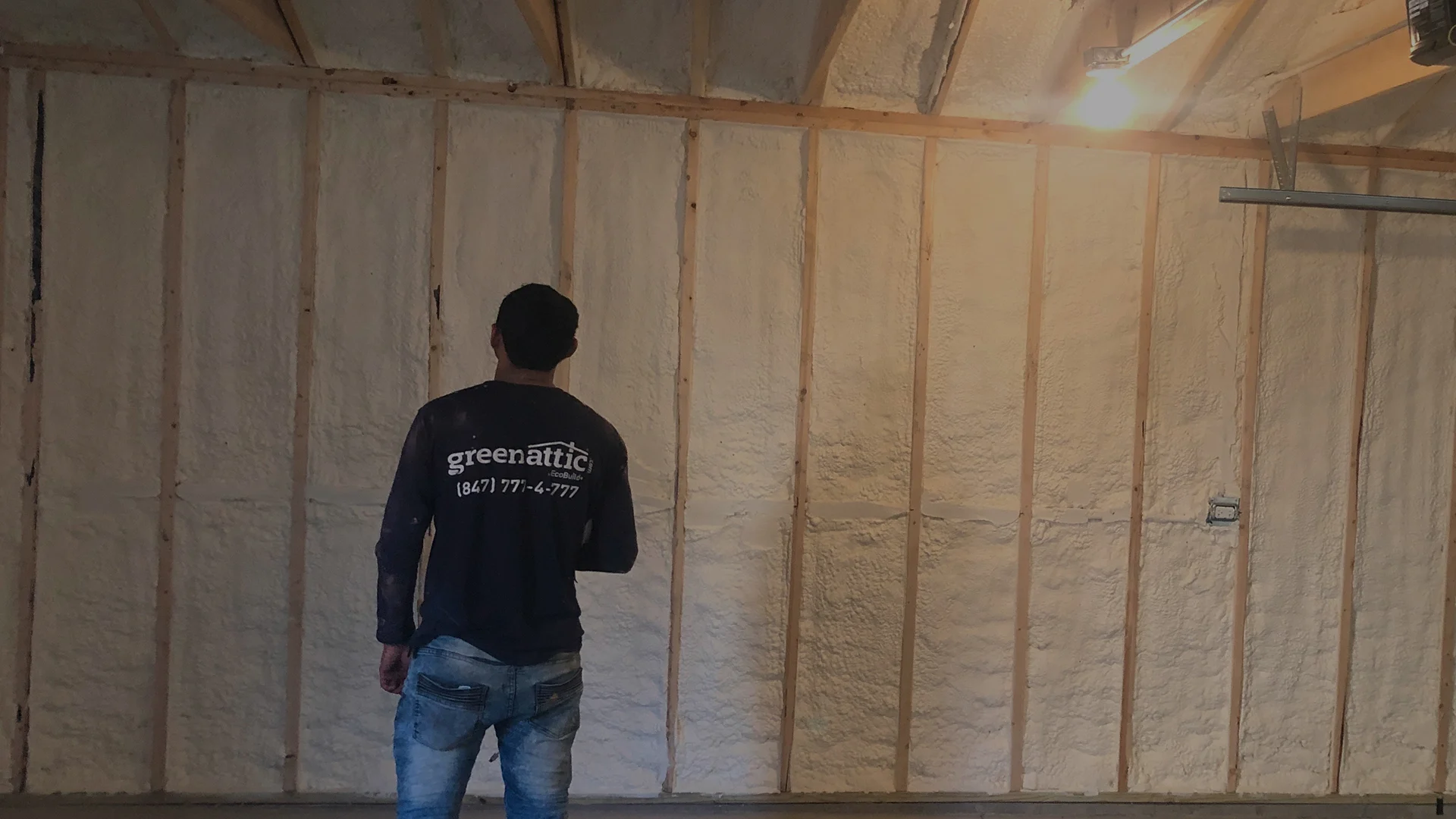
Spray Foam Insulation in Chicagoland
Green Attic delivers high-performance spray foam insulation in Chicago, sealing air gaps for year-round comfort, energy savings, and healthier indoor air quality.

Trusted by homeowners for reliable, energy-saving insulation solutions.





Request a Quote Today
Please Fill Out the Form Bellow
First name *
Last name *
Email *
Phone *
Address, City, State, Zip *
Tell us more about your project
Get a Free Quote



Chicago Spray Foam Insulation Contractor
Contact us today for a free consultation. Green Attic is the best spray foam insulation contractor in Chicago, with 15 years of experience in residential, commercial, and personal project spray foam applications.
Get a Free Consultation

How Spray Foam Insulation Protects Your Home

Thermal Barrier

Pressure Barrier

Moisture Barrier
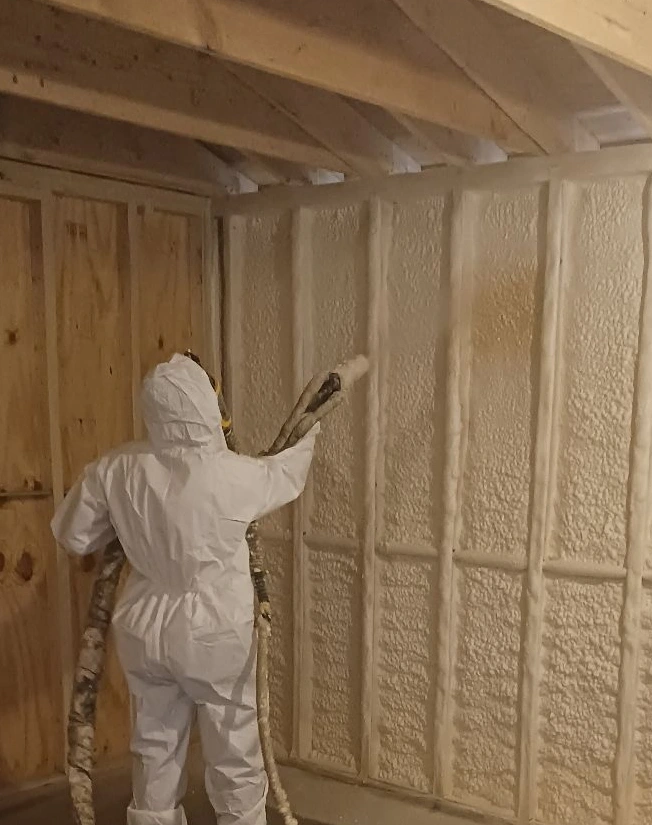
Uncompromised Shelter with Spray Foam Insulation
The building envelope separates the indoors from the outdoors. Insulate your home exterior walls and ceiling using spray foam insulation to create an uncompromised shelter.
Create a continuous insulation throughout its entire envelope without any thermal bridging using exterior insulators and closed cell spray foam – Best Performing Insulation for a complete moisture, pressure, and thermal barrier.
✓ Thermal Barrier - Highest R-Value Per Inch
✓ Moisture Barrier - Prevents Vapor Transfer
✓ Pressure Barrier - Prevents Air Movement
✓ Thermal Barrier - Highest R-Value Per Inch
✓ Moisture Barrier - Prevents Vapor Transfer
✓ Pressure Barrier - Prevents Air Movement

Where to Insulate With Spray Foam?
Roof /Ceiling Exterior Walls Headers/ Rim Joist Basement Concrete Walls Overhang Floors
If your existing home’s walls are 2×4 framing instead of the newer thicker 2×6 then Spray Foam Insulation is a difference maker over traditional insulation materials.
With increased R-value and less heat escape in winter and heat intrusion in summer, you can live more comfortably and pay less every month with lower maintenance costs.
With increased R-value and less heat escape in winter and heat intrusion in summer, you can live more comfortably and pay less every month with lower maintenance costs.

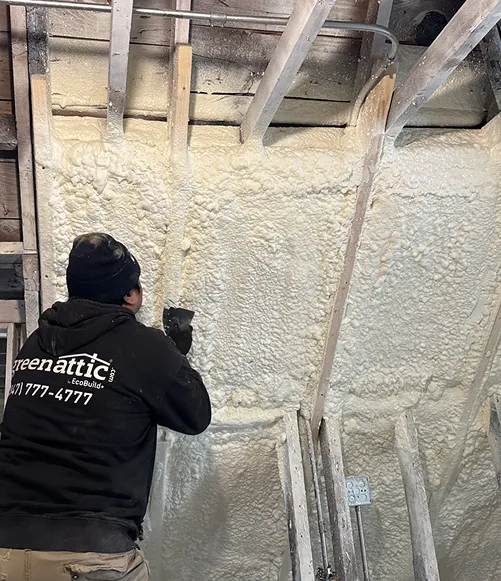
For advanced temperature control, superior moisture resistance, and added structural support, higher-density spray foam delivers superior thermal moisture and air movement protection results.
With an even tighter seal and higher R-value per inch, closed-cell spray foam is ideal for residential, commercial, and industrial projects.
With an even tighter seal and higher R-value per inch, closed-cell spray foam is ideal for residential, commercial, and industrial projects.
Closed Cell Spray Foam
• Best for above grade exterior walls, garage ceilings, foundation walls, rim joists, etc.
• Requires an intumescent barrier in an occupied space or storage space. Closed Cell is a two-Part , medium-density, one-to-one-by-volume spray-applied polyurethane foam.
• Closed Cell production requires the use of an “A” component (ISO) and a blended “B” component (RESIN), which contains ZERO ozone-depleting blowing agents, catalysts, polyols, and fire-retarding materials.
• Closed Cell is an insulation system designed for use in residential applications. Use it in lieu of more traditional forms of insulating materials such as fiberglass, cellulose, or other loose-fill products.
• Typical areas where spray polyurethane foam is applied are exterior walls, vented attics, unvented attic assemblies, between floors, foundations, crawl spaces, HVAC ducts, fluid tanks, and cold storage units.
• Requires an intumescent barrier in an occupied space or storage space. Closed Cell is a two-Part , medium-density, one-to-one-by-volume spray-applied polyurethane foam.
• Closed Cell production requires the use of an “A” component (ISO) and a blended “B” component (RESIN), which contains ZERO ozone-depleting blowing agents, catalysts, polyols, and fire-retarding materials.
• Closed Cell is an insulation system designed for use in residential applications. Use it in lieu of more traditional forms of insulating materials such as fiberglass, cellulose, or other loose-fill products.
• Typical areas where spray polyurethane foam is applied are exterior walls, vented attics, unvented attic assemblies, between floors, foundations, crawl spaces, HVAC ducts, fluid tanks, and cold storage units.

Open Cell Spray Foam
For more comfortable and consistent indoor temperature control and optimum energy efficiency, Open Cell spray foam products are the natural choice.
Light-density spray foams provide lower R-value per inch than closed cell spray foam, expanding into crevices and cracks to create a precision seal that beats traditional fiberglass, cellulose, and other loose-fill products.
Open Cell Spray foam will allow moisture to wick through, ideal for attic and garage ceilings and commercial building applications.
✓ Lower Cost Than Closed Cell Foam
✓ Not A Moisture Barrier
✓ Lower R-Value Per Inch
✓ Lower Density / Lighter /
✓ Easier to Remove / Demo
Light-density spray foams provide lower R-value per inch than closed cell spray foam, expanding into crevices and cracks to create a precision seal that beats traditional fiberglass, cellulose, and other loose-fill products.
Open Cell Spray foam will allow moisture to wick through, ideal for attic and garage ceilings and commercial building applications.
✓ Lower Cost Than Closed Cell Foam
✓ Not A Moisture Barrier
✓ Lower R-Value Per Inch
✓ Lower Density / Lighter /
✓ Easier to Remove / Demo
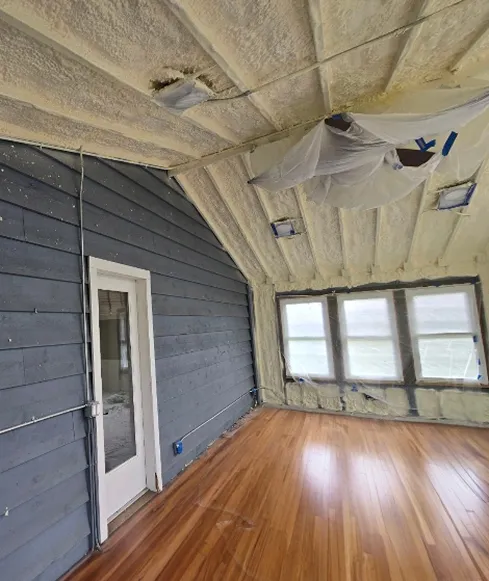
Consider spray foam for roof decks, balconies, overhangs, exterior walls, etc. Spray foam insulation (spray polyurethane foam or SPF) is a two part mixed spray-applied product widely used to insulate buildings and seal cracks and gaps, making the building more energy-efficient and comfortable.
SPF is known to resist heat transfer extremely well, and it offers a highly effective solution in reducing unwanted air infiltration through cracks, seams, and joints.
SPF is known to resist heat transfer extremely well, and it offers a highly effective solution in reducing unwanted air infiltration through cracks, seams, and joints.
Advanced Temperature Control
Closed Cell Spray Foam for advanced temperature control, superior moisture resistance, and added structural support, higher-density spray foam delivers best results.
With an even tighter seal and higher R-value per inch, it is ideal for residential, commercial, and industrial projects.
• A Full Moisture, Pressure, and Thermal Barrier at 2mm and with an average R-Value of 6.5-7.4 per inch closed cell spray foam insulation has the best heat retention of any insulation.
Consider all the ways to use spray foam on your home, such as transition walls between garage and house, skylights, exterior walls, windows, window wells, box sill, rim joist, sill plate, HVAC ductwork in unconditioned cavities or vented attics.
Yes, in residential and commercial applications, using spray foam for duct work in unconditioned spaces to creates an airtight duct delivery system with an active thermal barrier.
This is superior to interior duct sealing as it provides thermal protection resulting in superior performance of conditioned air delivery. Closed cell foam is also ideal for commercial roof insulation projects.
With an even tighter seal and higher R-value per inch, it is ideal for residential, commercial, and industrial projects.
• A Full Moisture, Pressure, and Thermal Barrier at 2mm and with an average R-Value of 6.5-7.4 per inch closed cell spray foam insulation has the best heat retention of any insulation.
Consider all the ways to use spray foam on your home, such as transition walls between garage and house, skylights, exterior walls, windows, window wells, box sill, rim joist, sill plate, HVAC ductwork in unconditioned cavities or vented attics.
Yes, in residential and commercial applications, using spray foam for duct work in unconditioned spaces to creates an airtight duct delivery system with an active thermal barrier.
This is superior to interior duct sealing as it provides thermal protection resulting in superior performance of conditioned air delivery. Closed cell foam is also ideal for commercial roof insulation projects.
Can it be too hot or cold outside to spray foam?
Yes, it can be too cold to spray foam if the space and the surface of are below 40 degrees. Our truck mounted machines are heated, and we can provide heaters and maintain optimal temperatures for the space.
Spray foam will adhere to a variety of surfaces including wood, metal, glass, concrete house wrap and vapor barrier materials, etc. The optimal temperature for spray foam is 70-90 degrees.
Spray foam will adhere to a variety of surfaces including wood, metal, glass, concrete house wrap and vapor barrier materials, etc. The optimal temperature for spray foam is 70-90 degrees.
Get a Free Consultation

Observe the process of spray foam insulation application

1. Basement wall ready for spray foam

2. Closed cell spray foam applied

3. Drywall installed over foam

4. Drywall sanded and ready for paint
Get a Free Consultation


Closed Cell Spray Foam Crawlspace Walls
• An effective treatment of a moist / damp crawlspace is a vapor barrier. This will prevent moisture from the natural ground level and condensation on the ductwork, wood framing, and mold growth as a result of moisture.
• Air penetration into the house at ground level is visible from dust captured by fiberglass insulation, water / moisture stains on nails and cobwebs around air pathways.
• These signs represent the room for improvement in your homes thermal, moisture and pressure barrier of the conditioned living space with a crawl space encapsulation treatment of the parameter.
• Closed Cell Spray Foam as an insulator in crawl spaces outperforms alternatives but is more costly to manufacture and install.
• Air penetration into the house at ground level is visible from dust captured by fiberglass insulation, water / moisture stains on nails and cobwebs around air pathways.
• These signs represent the room for improvement in your homes thermal, moisture and pressure barrier of the conditioned living space with a crawl space encapsulation treatment of the parameter.
• Closed Cell Spray Foam as an insulator in crawl spaces outperforms alternatives but is more costly to manufacture and install.
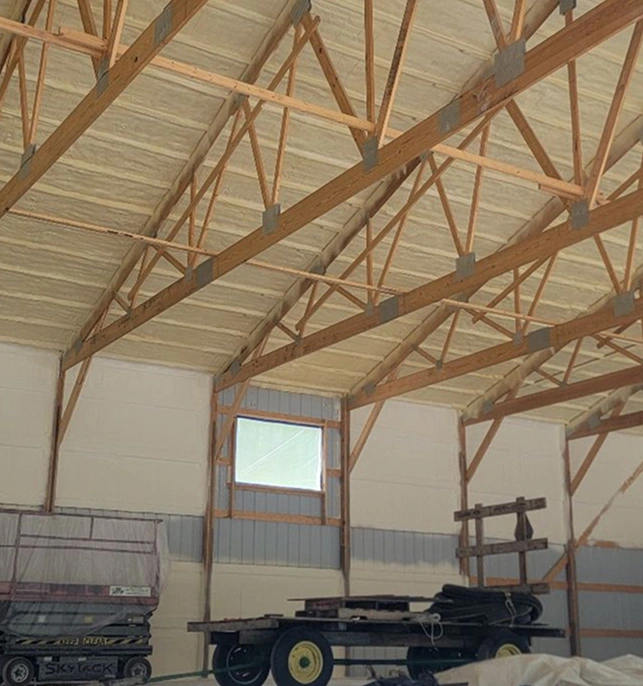
Commercial / Industrial Spray Foam
Closed Cell Spray Foam Transition Walls / Cathedral Ceilings
Closed cell spray foam makes has the highest R-value per inch of any insulation R7.4 per inch
✓ Full moisture pressure & thermal barrier
✓ Warmer all winter long
✓ Cooler in the summer
✓ Improve indoor air quality
✓ Consistent temperatures
✓ Full moisture pressure & thermal barrier
✓ Warmer all winter long
✓ Cooler in the summer
✓ Improve indoor air quality
✓ Consistent temperatures

Great for Sill Plate and Rim Joist
Box Sill Basement Insulation, two-part closed cell spray foam has three advantages over fiberglass, cellulose, sheep’s wool, rockwool, mineral wool, and other types of insulation.
✓ Rim Joist Thermal Barrier - Highest R-Value Per Inch
✓ Rim Joist Moisture Barrier - Prevents Vapor Transfer
✓ Rim Joist Pressure Barrier - Prevents Air Movement
✓ Rim Joist Thermal Barrier - Highest R-Value Per Inch
✓ Rim Joist Moisture Barrier - Prevents Vapor Transfer
✓ Rim Joist Pressure Barrier - Prevents Air Movement
Frequently Asked Question
Is spray foam insulation better than fiberglass or cellulose?
Yes, spray foam is often better than fiberglass and cellulose because it delivers strong air sealing, high R-value per inch, and added moisture resistance, making it great for maximizing comfort and energy efficiency.
While it’s a bigger upfront investment, often around 4–8× the cost of fiberglass or cellulose, it can be a great fit for homeowners who want maximum performance, while fiberglass or cellulose remain excellent, budget-friendly options.
Spray foam is ideal if you want the highest efficiency, strong draft control, and added moisture resistance, while fiberglass or cellulose are great options when you want dependable comfort and insulation at a lower upfront cost, and cellulose adds an eco-friendly bonus.
While it’s a bigger upfront investment, often around 4–8× the cost of fiberglass or cellulose, it can be a great fit for homeowners who want maximum performance, while fiberglass or cellulose remain excellent, budget-friendly options.
Spray foam is ideal if you want the highest efficiency, strong draft control, and added moisture resistance, while fiberglass or cellulose are great options when you want dependable comfort and insulation at a lower upfront cost, and cellulose adds an eco-friendly bonus.
Can spray foam be applied in crawl spaces or rim joists, and what are the benefits?
Yes, spray foam can absolutely be applied in crawl spaces and rim joists, and it’s one of the best places to use it. It insulates and air-seals at the same time, helping block drafts, reduce moisture issues, and improve comfort (like warmer floors) while lowering energy loss. Closed-cell spray foam is often preferred here because it delivers a higher R-value and adds strong moisture resistance for long-lasting protection.
Will spray foam help solve my draft issues, hot upstairs rooms, or uneven temperatures better than other insulation types?
Yes, spray foam can often solve drafts, a hot upstairs room, or uneven temperatures better than fiberglass or cellulose because it expands to fill gaps and works as both insulation and an air barrier.
Fiberglass mainly slows heat transfer but still allows air to move through it, while spray foam helps stop both heat loss and air leakage for more consistent comfort. Fiberglass and blown-in cellulose can still be great insulators, but spray foam shines when air leakage is the main driver behind comfort problems.
Fiberglass mainly slows heat transfer but still allows air to move through it, while spray foam helps stop both heat loss and air leakage for more consistent comfort. Fiberglass and blown-in cellulose can still be great insulators, but spray foam shines when air leakage is the main driver behind comfort problems.
Will I need ventilation changes, like sealing soffit vents or adding mechanical ventilation, after spray foaming?
Yes, you need to make ventilation changes, such as sealing soffit vents or adding mechanical ventilation, after applying spray foam insulation to help the foam perform at its best and support consistently fresh, comfortable indoor air.
When spray foam creates a sealed, conditioned attic, soffit, ridge, and gable vents are typically sealed to help the system perform at its best and keep the space consistently comfortable and efficient.
If additional fresh-air ventilation is needed, a simple solution like an ERV/HRV can maintain indoor air quality and humidity within a good range. Many homeowners also benefit from a quick HVAC/builder assessment afterward to confirm airflow and comfort are dialed in.
When spray foam creates a sealed, conditioned attic, soffit, ridge, and gable vents are typically sealed to help the system perform at its best and keep the space consistently comfortable and efficient.
If additional fresh-air ventilation is needed, a simple solution like an ERV/HRV can maintain indoor air quality and humidity within a good range. Many homeowners also benefit from a quick HVAC/builder assessment afterward to confirm airflow and comfort are dialed in.
What prep work is needed before spray foam insulation installation?
The prep work needed before spray foam insulation installation includes clearing the area for easy access, removing existing insulation where needed, and adding simple blocking/covering around soffits, eaves, vents, and penetrations so the foam goes on smoothly and delivers the best air-seal, comfort, and long-term performance.
Most installers include surface protection (plastic/taping) and jobsite prep in the quote, and many also include removing old insulation; your estimate will clearly list what’s included for your project. Any underlying repairs, such as roof leaks, wet wood, or electrical issues, are best handled beforehand so the foam can deliver long-lasting comfort and efficiency.
Most installers include surface protection (plastic/taping) and jobsite prep in the quote, and many also include removing old insulation; your estimate will clearly list what’s included for your project. Any underlying repairs, such as roof leaks, wet wood, or electrical issues, are best handled beforehand so the foam can deliver long-lasting comfort and efficiency.
If I have older wiring, can spray foam be installed safely, and will an electrician be needed first?
Yes, spray foam can be installed safely with older wiring in many homes, and a quick electrical check is a smart way to ensure everything is ready for a high-performance, airtight upgrade.
If your home has knob-and-tube or older wiring, an electrician can easily update or safeguard those areas first, ensuring a smooth, safe, and code-compliant spray foam installation. Your installer will also keep foam out of electrical boxes and maintain proper clearances where needed.
If your home has knob-and-tube or older wiring, an electrician can easily update or safeguard those areas first, ensuring a smooth, safe, and code-compliant spray foam installation. Your installer will also keep foam out of electrical boxes and maintain proper clearances where needed.
What is the expected payback period for spray foam based on my energy bills, home size, and climate?
The expected payback period for spray foam is typically about 3-7 years, and many homeowners see 3–5 year payback when energy bills drop around 20%–50%, especially in very hot or very cold climates. Payback is often quickest in older or leakier homes and when upgrading attics or rooflines, where air sealing delivers immediate comfort and savings.
Service Areas
Northwest Suburbs

North Shore
Learn More


