



Spray foam crawl space encapsulation can help control moisture, reduce drafts, and make the rooms above the crawl space feel more comfortable. When it is part of a full encapsulation system, it can also help protect the space below the home from outside air and damp conditions.
This guide explains when spray foam makes sense in a crawl space, what parts of the system matter most, how it compares with other solutions, and what Chicago homeowners should know before moving forward.
Key Highlights
- When spray foam crawl space encapsulation is part of a full encapsulation system, it helps reduce drafts and damp conditions, making the space above it more comfortable.
- One of the best places to use spray foam is at the rim joist or at the joist box, where outside air usually comes in.
- A full crawl space system usually includes a ground vapor barrier, insulation in the right places, air sealing, and moisture control.
- Issues such as seepage, standing water, or drainage problems should be fixed before crawl space encapsulation.
- Crawl space encapsulation can help manage humid summer air, ground moisture, and cold winter temperatures, which can improve comfort above the crawl space throughout the year.
What Is Spray Foam Crawl Space Encapsulation?
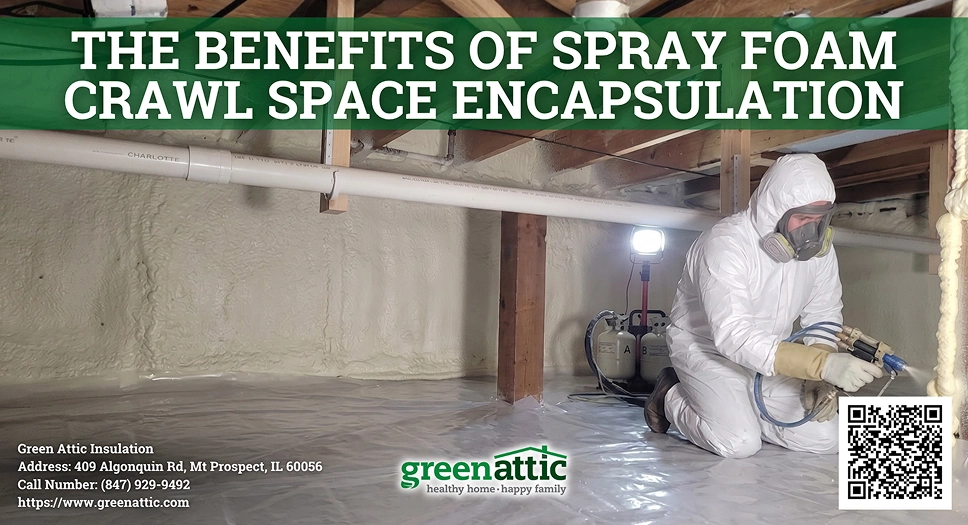
Spray foam crawl space encapsulation helps keep the space under your home drier, less drafty, and easier to manage. It usually includes a ground vapor barrier, moisture control, air sealing, and proper insulation.
Spray foam is often used at the rim joist or joist box, where outside air usually gets in, to help seal gaps and add insulation in the same area.
As part of a full encapsulation system, spray foam can help make the rooms above the crawl space feel more comfortable year-round.
Benefits of Spray Foam Crawl Space Encapsulation
When used in the right areas, spray foam crawl space encapsulation can help reduce air leaks, limit damp conditions, and make the space below the home easier to control.
Less Outside Air Entering the Crawl Space
Spray foam helps seal gaps where outside air gets into the crawl space, especially around the rim joist or joist box. This can help reduce drafts below the home.
Better Moisture Control Below the Home
Although spray foam cannot replace a vapor barrier or drainage work, it can support a drier crawl space by removing air movement in key areas as part of a full encapsulation system.
More Comfortable Floors and Rooms Above
When the crawl space is less exposed to outside air, the rooms above it can feel more stable and controlled. Floors may feel less cold, and some rooms may be easier to heat and cool.
A More Stable Crawl Space Environment
Spray foam works best when it is combined with a ground vapor barrier, air sealing, and moisture control. Together, these measures help keep the crawl space drier and less drafty throughout the year.
Crawl Space Encapsulation Case Study in Naperville, IL
Project Snapshot
Location: Naperville, IL
Problem: A weak thermal barrier, moisture issues, and old batt insulation
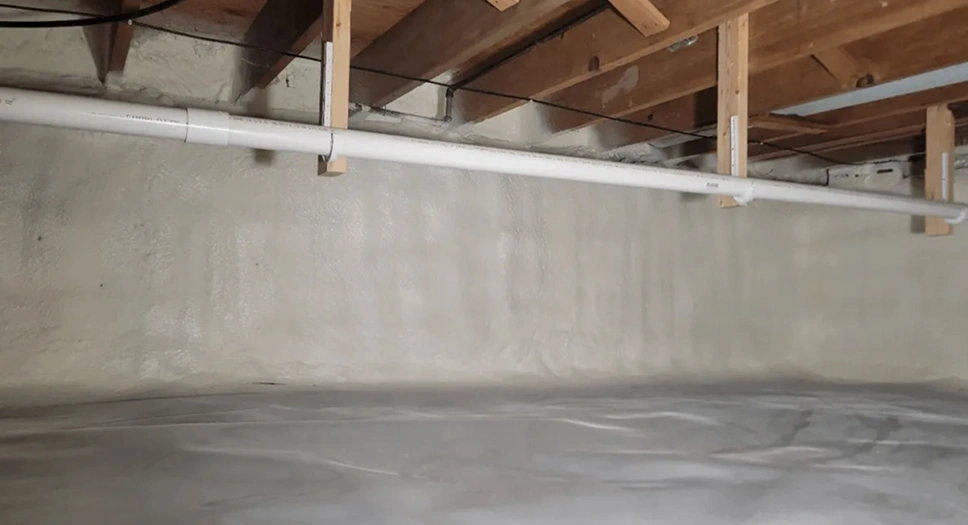
Solution: Installed a moisture barrier across about 1,200 square feet of crawl space floor, removed approximately 500 square feet of old batt insulation, and installed 3 inches of closed-cell spray foam insulation to around 720 square feet of crawl space walls
Result: Improved insulation, better moisture control, and a lower risk of mold and wood rot.
In this Green Attic Naperville project, the crawl space needed better moisture protection and stronger insulation. The existing batt insulation was no longer the right fit for the space, and the crawl space needed a stronger thermal barrier against damp conditions.
To fix that, the Green Attic team installed a new moisture barrier across around 1,200 square feet of crawl space floor, removed about 500 square feet of old batt insulation, and applied 3 inches of closed-cell spray foam insulation to approximately 720 square feet of crawl space walls.
The new moisture barrier helped control dampness below the home, while the closed-cell spray foam added insulation and sealed key areas of the crawl space. The work helped improve moisture control, strengthen insulation, and make the home more energy efficient. The project also lowered the risk of mold growth and wood rot.
When Does Spray Foam Make Sense in a Crawl Space?
Spray foam can make sense in a crawl space when air leakage is affecting the home above. It is often worth considering when the crawl space is contributing to musty odors, drafts, or damp conditions. In the right areas, it can help seal problem spots and improve conditions below the home.
Signs Your Crawl Space Has Moisture or Air Leakage Issues
Small changes in comfort and air quality can sometimes point to crawl space conditions that are worth addressing. Uneven temperatures, cold floors, musty smells, and rooms that are harder to heat or cool can all be signs that improving the crawl space may help the home feel more comfortable.
Common signs include:
- Sagging or sloping floors: If the floor above the crawl space feels soft, uneven, or unusually bouncy, it may be a sign that crawl space improvements could help support a more solid, stable floor.
- Musty odors inside the home: A strong, stale smell can be a sign that damp air from the crawl space is affecting the rooms above and that better moisture and air control may help freshen the space.
- Issues found by other contractors: HVAC technicians, plumbers, and electricians often spot mold, pests, visible air leaks, and standing water during service visits.
When these signs are present, spray foam may help address air leakage in the crawl space and improve conditions above it.
How Green Attic Evaluates a Crawl Space
Before recommending spray foam or encapsulation, Green Attic assesses the crawl space's condition, where outside air is leaking in, and whether moisture is coming from the ground or from outside the home. Green Attic also checks the existing insulation, the floor type, and whether the space needs drainage work, a vapor barrier, or a different insulation approach.
In many homes, the right system includes a 10 mil polyethylene vapor barrier up the walls and closed-cell spray foam at the rim joist, support beam seams, and other key leakage areas.
What Makes an Encapsulated Crawl Space Work?
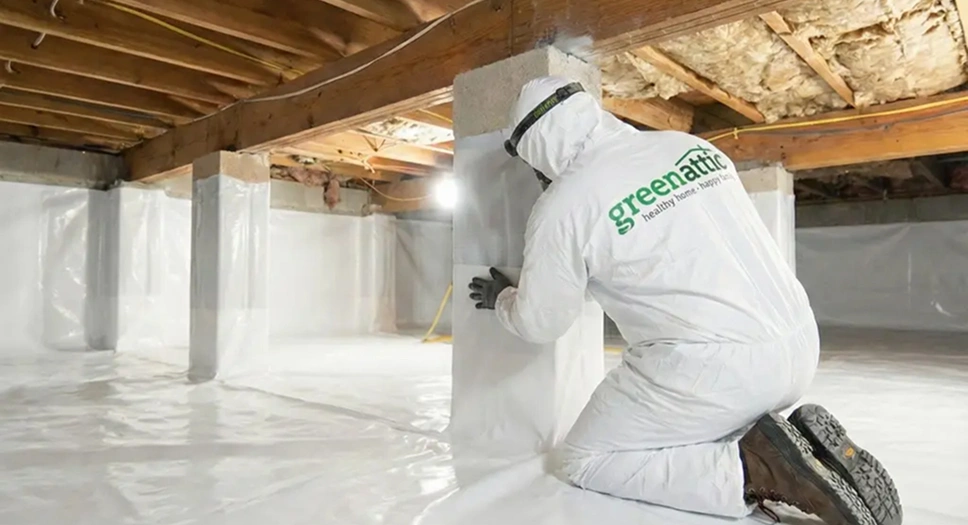
An encapsulated crawl space works best when the space is handled as a system, not just insulated in one area. Air leaks, ground moisture and insulation all affect how the space performs. When the full system is in place, the crawl space is more likely to stay dry, stable, and easier to control throughout the year.
In Climate Zone 5A, crawl spaces usually perform better when the thermal boundary is set at the foundation walls rather than the floor above. To help control ground moisture, exposed soil should be covered with a continuous Class I vapor retarder. The rim joist should also be air-sealed, as it is one of the most common leakage points in the space.
In many Chicago-area homes, this approach works best when the crawl space is treated as conditioned or unvented rather than left vented.
Why the Rim Joist or Joist Box Is a Common Air Leakage Point
The rim joist or joist box sits where the floor framing meets the exterior wall. Because several materials come together in this area, small gaps and cracks are common, which makes it one of the most important places to improve air sealing. Those openings can be larger in older homes because of age, settling, or past work around pipes and wiring.
This area also runs along the outer edge of the house, so even small gaps can add up. This is why the rim joist is often one of the first places that contractors check when a crawl space feels exposed or poorly sealed.
Key Components of an Encapsulated Crawl Space
Each part of the encapsulation system has a specific job. Together, these components help limit air leakage, control ground moisture, and make the crawl space more stable.
Spray Foam at the Rim Joist or Joist Box
Spray foam seals gaps and adds insulation in the same area. It works well at the rim joist because it expands into uneven spaces and narrow joints that are hard to cover with other materials.
The rim joist is one of the most common sources of leakage in a crawl space, so sealing it can help reduce unwanted airflow and make the space easier to manage year-round.
Ground Vapor Barrier
A ground vapor barrier covers the soil and blocks moisture from rising into the crawl space. It still matters even when closed-cell spray foam is used. Building America guidance for unvented, insulated crawlspaces calls for the crawl space floor to be covered with a polyethylene vapor retarder rather than relying on foam alone for ground moisture control.
To work well, it should fully cover the ground and be sealed at the seams and edges. Without that coverage, exposed soil can keep adding moisture to the crawl space and contribute to musty odors and damp conditions.
Air Sealing Gaps and Penetrations
Air sealing closes openings around pipes, wiring, ducts, and framing joints that can let outside air into the crawl space. Sealing these openings can help the crawl space stay more stable and support the rest of the encapsulation work.
Moisture Control and Drainage
Moisture control addresses water problems before encapsulation begins, including leak repairs, drainage fixes, grading adjustments, and other measures to keep water out of the crawl space.
Closed-cell spray foam has low vapor permeance and can help with air sealing, but it does not replace drainage corrections or bulk water management. If the crawl space has standing water, seepage, or a history of flooding, those issues should be addressed before spray foam is installed.
When those problems are fixed first, the crawl space is more likely to stay dry and perform better after air sealing and insulation are installed.
Perimeter Insulation Strategy
Perimeter insulation is installed along the crawl space walls instead of only under the floor above. In many homes, this works better when the crawl space is treated as part of the building envelope, helping the space stay more consistent.
Crawl Space Access Door and Vent Sealing
Access door and vent sealing closes openings that let outside air into the crawl space. Foundation vents and access doors are key areas to seal when creating a more enclosed crawl space. If those openings are left untreated, outside air can keep getting in after the crawl space has been sealed and insulated.
Crawl Space Encapsulation vs Other Solutions
The table below compares common crawl space options and what each one does.
Caption: Crawl space encapsulation vs other solutions.
The table shows that each option addresses a different part of the problem. Spray foam helps with air leakage, a vapor barrier helps with ground moisture, and waterproofing addresses water entering the crawl space. When a crawl space has several issues at once, full encapsulation is usually the more complete solution.
How Much Does Spray Foam Crawl Space Encapsulation Cost?
The table below shows what is included and what can increase the cost:
Caption: Crawl Space Encapsulation Cost and Scope (source: Green Attic insulation prices page)
Green Attic lists $900 as the starting price for a minimum-size crawl space. The final cost depends on the size of the space and the amount of work included. A smaller crawl space with a limited scope may stay closer to the starting price, while a larger space or added moisture work will increase the cost.
Crawl Space Encapsulation in Chicago Homes
Chicago crawl spaces often deal with damp ground, humid summer air, and cold winter temperatures. In many older homes, better sealing, vent treatment, and insulation upgrades can help improve comfort by reducing stale air during humid months, cold floors in winter, and damp conditions below the house.
For Chicago projects, permit needs can vary based on the work being done, so homeowners should check how the Chicago Energy Transformation Code and Department of Buildings requirements apply to their project.
Homeowners may also want to review current utility weatherization and rebate programs through Peoples Gas, North Shore Gas, or Nicor Gas. The federal Section 25C insulation credit applied through December 31, 2025, so it is not an active 2026 incentive.
Green Attic Insulation is a BPI-certified contractor serving Chicagoland and specializing in insulation and crawl space work in existing homes. If you are not sure whether your home needs encapsulation, moisture control, or spray foam insulation, our team can inspect your space and help you decide on the next step.
About the Author
Dumitru Nicolaescu is a Chicago insulation professional with over 25 years of construction experience. He specializes in insulation, air sealing, and crawl space improvements for existing homes.
President and owner of Green Attic Insulation Chicago.

Share with the world


