
While Chicago winters can be unpredictable, protecting your home from frozen pipe bursts is well within reach. With the right preparations, you can stay one step ahead this winter season.
Whether you’re living in a vintage apartment or a modern single-family home, this guide gives you an idea of what to do if a burst pipe happens, how to prevent future issues, and whether insurance covers frozen pipes.
Why Chicago’s Extreme Weather Causes Frozen Pipe Bursts
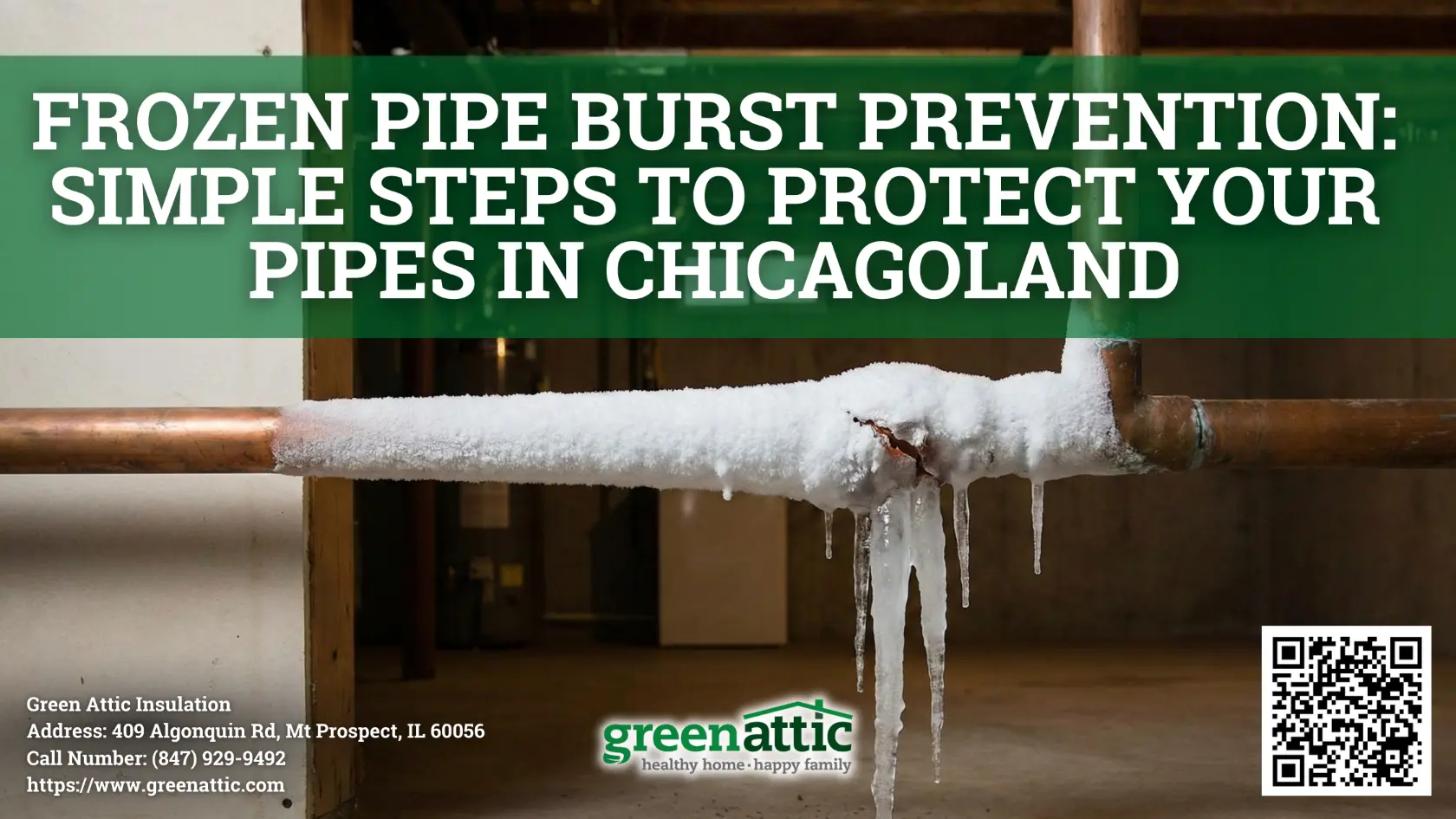
When Chicago wind chills dip to -14°F during polar vortex cold snaps, proactive pipe prep can help maintain reliable water flow and peace of mind during winter.
Overnight cold snaps can cool pipes in garages, exterior walls, basements, and other chilly zones, so early preparation is a smart way to keep plumbing running smoothly.
In an interview with NBC Chicago, local officials shared a few helpful tips to stay prepared and comfortable during extreme cold:
- Keep water moving with a small faucet drip to prevent frozen pipes.
- Enjoy added warmth safely by keeping space heaters at least 3 feet from anything combustible.
- During severe cold, limiting outdoor exposure and keeping indoor temperatures steady is a simple way to stay safe and comfortable.
- Stay prepared and confident by stocking up on essentials and checking that your smoke and carbon monoxide detector batteries are working properly.
Quick Action Steps to Protect Your Chicago Home from a Burst Pipe
A burst pipe can catch anyone off guard, but acting quickly helps keep the situation manageable.
Whether you're in a vintage Chicago apartment or a single-family home, these steps can help minimize damage and set you up for a smooth recovery:
- Step 1: Cut off the water quickly to prevent damage. Turning your main shut-off valve clockwise stops water flow quickly and helps keep the situation manageable.
- Step 2: Switch off the power for safety and peace of mind. If outlets, appliances, or wiring are near the water, switching off power at the breaker panel supports a safer, smoother recovery.
- Step 3: Release pressure and focus on recovery. Opening cold taps from top to bottom, then turning off your water heater and opening hot taps, helps release pressure and flush out water, which is an easy way to lower the risk of frozen or burst pipes.
- Step 4: Keep water contained and damage low. Dealing with water indoors can be stressful, but a few simple actions, such as using towels and buckets to catch it, can make a big difference. In older homes, protecting historic finishes like wood and plaster can help preserve their charm.
- Step 5: Control the damage with a simple patch. Wrapping the pipe with plumber's tape, a towel, or a rubber can help control the leak and protect your home as a temporary fix. Securing the wrap adds extra stability and gives you more time to address the issue, especially in cold conditions.
The Stack Effect: An Important Key to Pipe Protection
Frozen pipes are not just caused by cold weather; by learning how indoor airflow, like the stack effect, works, homeowners can take proactive steps to keep their plumbing safe all winter
Unlocking the Stack Effect: Smart Ways to Keep Your Pipes Safe in Winter
Warm air naturally moves upward in a heated home, but sealing and insulating your attic helps keep that warmth inside, right where you want it.
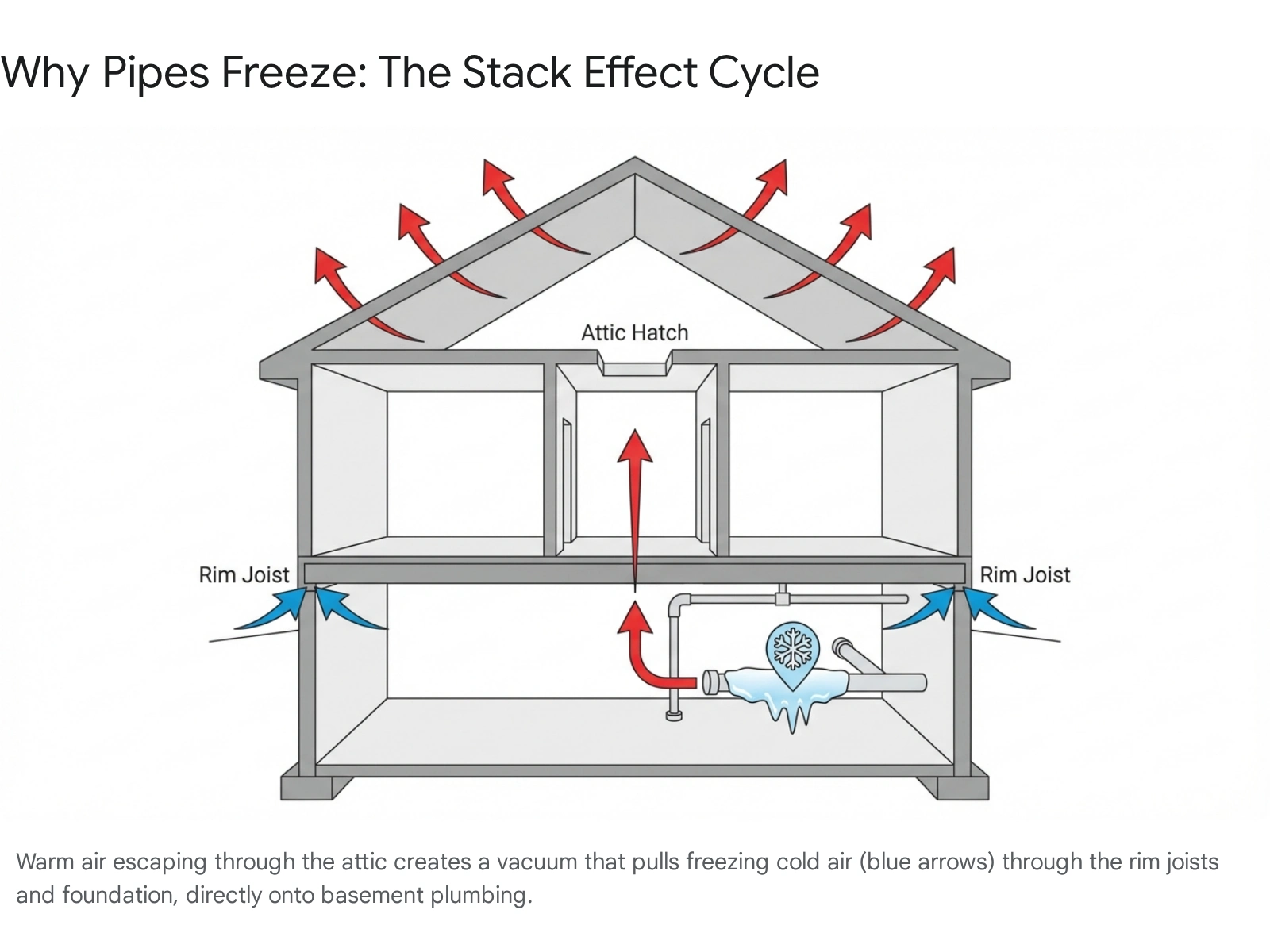
This upward airflow naturally creates a slight pressure drop in the basement and crawl space, an important insight for managing your home's energy and comfort.
The home rebalances air pressure by drawing in outdoor air through easy access points like rim joists and utility penetrations, highlighting areas where air sealing can make a big difference.
The fresh air drawn in to balance pressure often travels near plumbing lines in basements or crawl spaces, offering a chance to spot and protect vulnerable areas.
This kind of airflow may chill pipes to freezing temperatures, but with a few simple insulation upgrades, it’s easy to safeguard your plumbing even on the coldest days.
Improving insulation and sealing those areas can enhance energy efficiency while also protecting your plumbing.
How Chicago’s Housing Stock Can Benefit From Upgrades
Another smart move is learning how your home responds to winter conditions, helping you prioritize the upgrades that matter most. In many Chicago homes, efficient heat retention and controlled airflow contribute to stable indoor pipe conditions.
With a clear picture of how heat and air move through your home, it becomes easier to identify priority areas and choose upgrades that support warmer pipes in cold weather.
The Chicago Bungalow
Because plumbing is sometimes routed near knee walls in bungalows, improving insulation and air sealing in these spaces can make a noticeable difference in maintaining comfortable pipe temperatures.
When knee wall areas are thoughtfully sealed and insulated, they help guide airflow away from nearby pipe runs and support more consistent pipe temperatures.
Ice dams on bungalows often provide a clear picture of how heat behaves near the roofline, helping homeowners better understand their home’s winter performance.
A quick look at the gutters during winter can also offer helpful context. Understanding those patterns can make it easier to decide where targeted efficiency improvements may be most effective.
Bungalow homeowners will benefit most from three key upgrades that help maintain steady pipe temperatures during winter:
- Air seal and insulate behind knee walls to support consistent airflow control
- Control airflow from vented eaves before insulating to improve overall attic performance
- Seal the air leaks in the attic plane to improve roof heat management and support fewer ice dam issues
Split-Level Homes and Cantilevers
Cantilevered overhangs, where part of the upper floor extends past the foundation, are a smart, space-saving feature in many split-level homes in Chicago’s suburbs. Overhangs are a practical feature that supports well-organized plumbing layouts for kitchens and baths.
Sealing and insulating the underside soffit ensures that your pipes remain within your home’s protected envelope, reducing the risk for a high-risk freeze area during cold snaps and windy conditions.
Here are some opportunities for split-level homeowners to boost home performance and protect against frozen pipes:
- Look for cantilevered bays in kitchen and bathroom areas to ensure vulnerable pipes are fully protected.
- Air seal and insulate overhang cavities to keep plumbing warm and energy efficiency high.
- Customize insulation solutions to ensure cantilevered overhangs receive the protection of true exterior spaces.
Crawl Spaces
Crawl spaces are a common feature in Chicago homes, and improving their insulation and ventilation can significantly enhance winter performance.
While older building practices often include crawl space vents, modern upgrades can prevent cold air from entering and affecting floors, rim joists, and plumbing, especially near perimeter walls.
A modern encapsulation approach features:
- Vent sealing for improved air control
- Wall insulation to improve year-round temperature regulation
Full crawl space encapsulation is the solution to turn the crawl space into a conditioned "mini-basement" that protects pipes and improves overall home comfort.
Are Frozen Pipes Covered by Insurance?
Yes, homeowners insurance often covers the damage caused by a frozen pipe, and that’s great news for peace of mind during winter.
Most standard policies provide valuable protection by covering water damage from a burst pipe, including repairs to walls, floors, and furniture, as long as the incident was sudden and accidental.
While the cost of replacing the pipe itself may not always be included, the support for the resulting damage can be a major relief.
Insurers are more likely to approve your claim when you've taken simple, preventative actions, such as maintaining heat and insulating pipes, showing that you’ve actively safeguarded your home.
With policies differing from one homeowner to another, taking time to understand your coverage, and speaking with your insurance provider, can give you peace of mind as winter approaches.
About Green Attic Insulation
Green Attic Insulation is a trusted leader in energy-efficient home solutions, proudly serving Chicagoland and focusing on year-round home protection.
With expertise in building science and insulation best practices, our team specializes in sealing and insulating vulnerable areas, such as attics, crawl spaces, and cantilevered overhangs, to help prevent frozen pipes during harsh Midwest winters.
We understand the unique challenges Chicago homeowners face during the polar vortex, so we provide proactive solutions that keep homes warm, efficient, and protected.
Every project we complete is backed by a commitment to comfort, safety, and long-term peace of mind for homeowners.

Share with the world