
The Honest Answer: Maybe
Ask three contractors if you need a solar attic fan, and you may get different answers from all three. One says, “No, soffits and a ridge vent are enough.” Another says, “Yes, every attic needs active ventilation.” A third says, “Only if the attic has heat or moisture problems.”
The third answer is the closest because a solar attic fan is a tool, not magic. In the right attic, it moves stale, humid air out without adding electric operating cost, but it can pull conditioned air from the house and worsen the energy problem in the wrong attic.
At Green Attic, we treat solar fans as one part of a full attic system, with air sealing, R-60 blown cellulose, soffit intake, baffles, exhaust ventilation, and moisture control, since they work best when the entire system works together.
Why the Attic Fan Debate Exists
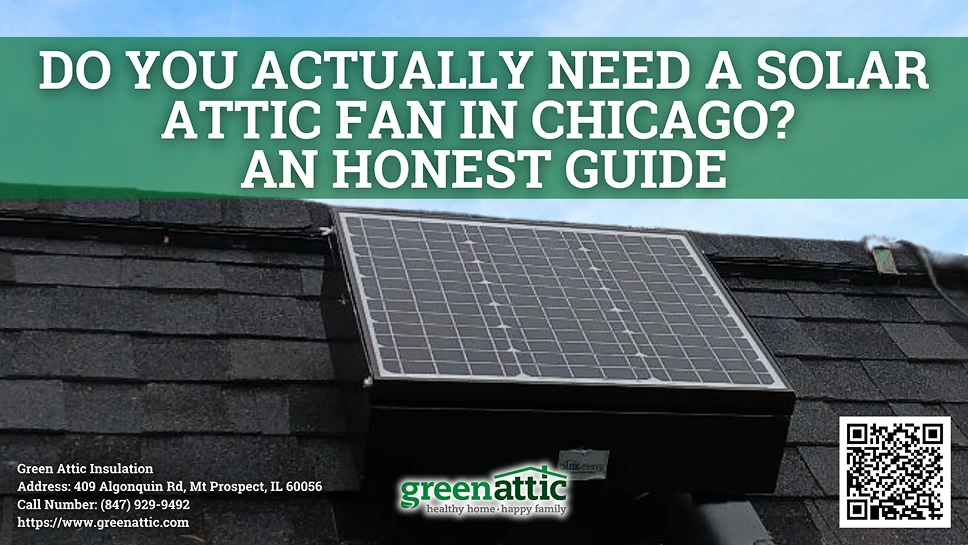
Both sides of the debate have a real point.
The "no fan needed" side is right that a properly designed vented attic should ventilate naturally, with outdoor air entering through soffit vents and warmer air exhausting through roof vents or ridge.
The “add active ventilation” side also makes a valid point: many Chicago-area attics can benefit from improvements first. Common issues like covered soffit vents, missing baffles, bath fans releasing moisture into the attic, air leaks, and insulation gaps are all fixable, and once corrected, the attic can ventilate better, stay drier, and support better home comfort.
The real question is not whether solar attic fans are good but whether the attic is built well enough for a solar fan to help instead of creating new problems.
The Negative-Pressure Concern and When It Disappears
A powered attic fan removes air from the attic, which has to be replaced from somewhere.
If the attic is leaky and intake ventilation is weak, the easiest replacement air comes from the house through ceiling gaps, recessed lights, plumbing penetrations, top plates, and attic hatches. That air has already been heated or cooled, which is why a fan installed without enough intake can end up increasing energy use instead of lowering it.
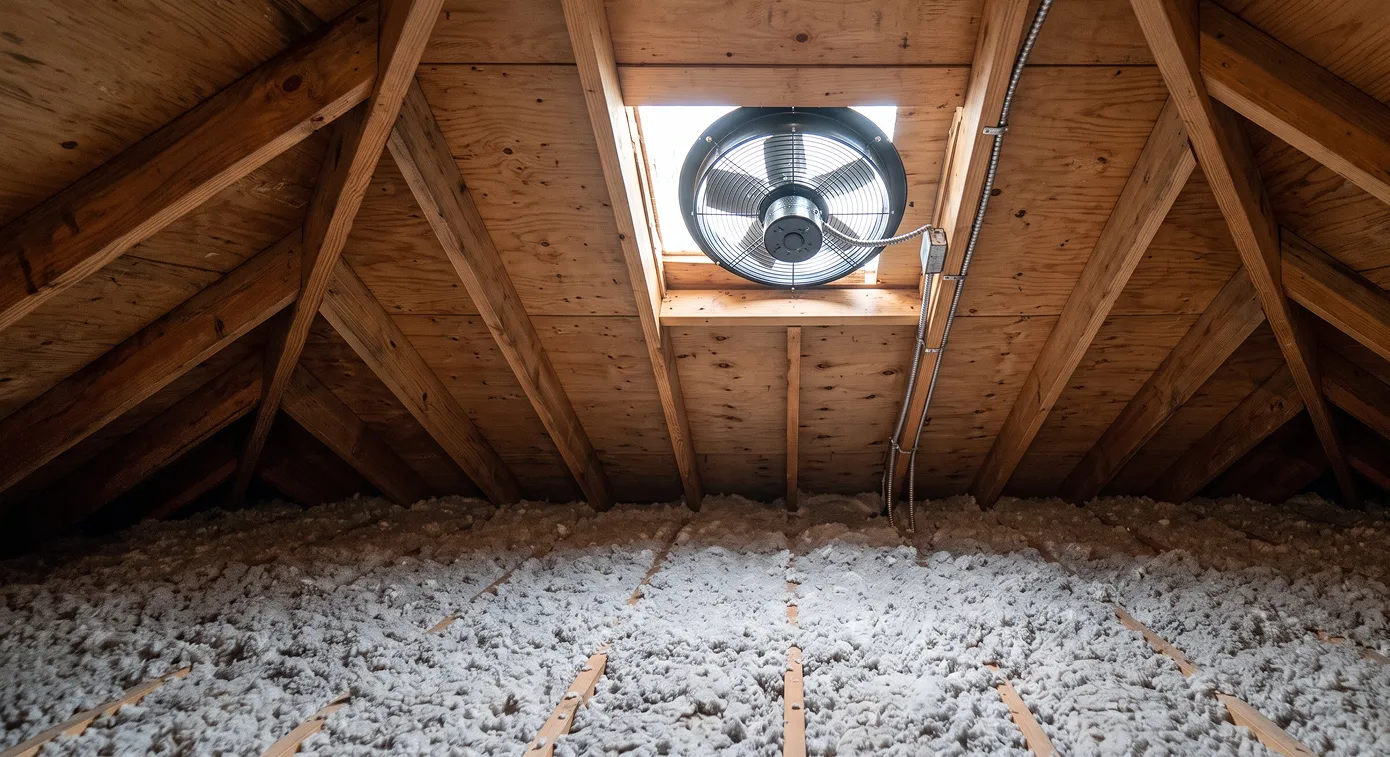
Here is the rule that clears it up: if the attic floor is properly air sealed, capped with at least R-60 blown cellulose, and the soffit-to-ridge ventilation is balanced and clear, there is no risk of negative pressure pulling conditioned air from the house. In this setup, the fan only pulls outdoor air through the open soffits, exactly as designed.
That is why Green Attic inspects the attic system before recommending a fan. If the air seal, insulation, and intake ventilation are already in place, the fan is a clean upgrade. If they are not, we fix the system first before adding the fan if it makes sense for the final setup.
When a Solar Attic Fan Makes Sense
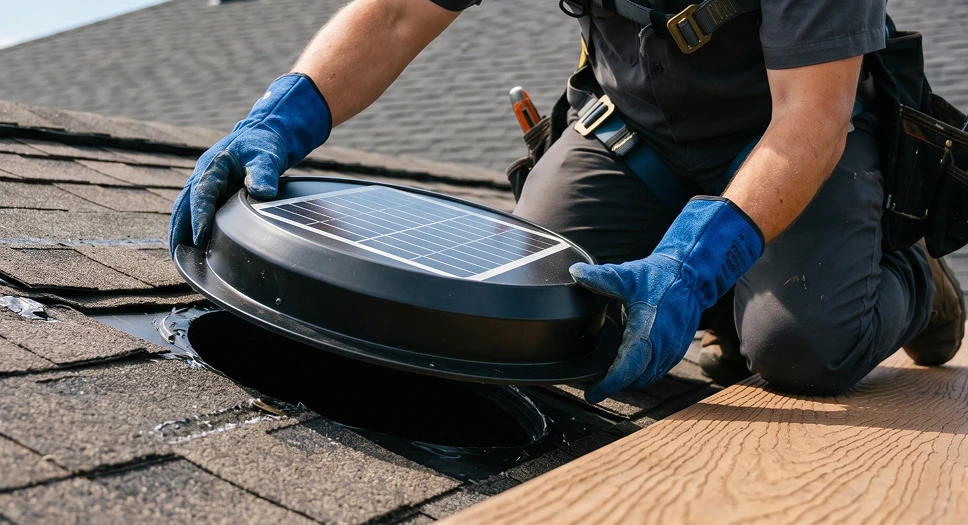
You are a strong candidate for a solar attic fan if:
- Your attic floor is fully air sealed at top plates, can lights, plumbing penetrations, and attic hatches.
- You have R-60 blown cellulose insulation or are upgrading to it.
- Your soffit intake vents are open and unblocked.
- Baffles are installed and clear at every rafter bay.
- You have stale air, heat buildup, frost history, rusted nails, moisture staining, or prior mold concerns, indicating that your attic can be improved with better ventilation, moisture control, and air sealing.
- You are already doing attic insulation, air sealing, or ventilation work.
The fan should be the final ventilation upgrade after the attic basics are right, not a shortcut around them.
When You Probably Do Not Need One
You may not need a solar fan if:
- Your attic is air sealed.
- Insulation is at R-60 depth and evenly installed.
- Soffit vents are open.
- Baffles are installed and clear.
- Passive ventilation is balanced.
- You have no history of mold or moisture.
- The home has moderate shade.
- Bath fans vent to the outdoors, not into the attic.
If the attic is already performing well, adding a fan may not be worth the cost, and our inspection will confirm whether it makes sense for your home.
The Snow, Frost, and Spring Mold Cycle
Many Chicago-area attics with soffit vents, ridge vents, and baffles can still benefit from a closer ventilation review, because passive ventilation works best when airflow conditions are clear, balanced, and consistent.
Passive ventilation depends on a temperature difference between the attic and the outside air. In summer, that difference in temperature is large, and the stack effect moves air effectively. In winter, spring, and fall, the temperature difference is often smaller, and snow on the roof can partially block ridge vents.
This cycle can be controlled with the right attic improvements:
- During winter, warm, humid air leaks from the house into the attic.
- Humidity hits cold roof framing and freezes as frost.
- Snow cover can temporarily limit ridge vent airflow.
- In spring, temperatures rise and the frost melts, but the framing stays wet.
- Wet wood plus moderate temperatures creates an ideal environment for active mold growth.
Air sealing addresses step 1 by reducing warm, humid air leakage from the living space. A solar fan helps reduce moisture buildup, supports attic drying during steps 3 and 4, and shortens the damp period when mold is most likely to develop. When used together, air sealing and solar ventilation create a more complete solution than relying on either one alone.
A solar fan cannot fully prevent winter frost during heavy snow cover or long, low-sun periods, so some moisture may still build up. Still, it can help the attic dry out faster once conditions improve.
Solar vs. Electric Fans

Both solar and electric fans move air, but they differ in how they are powered, how they are installed, and how long they usually last.
Electric attic fans use 120V grid power and require electrical work. They run on thermostats and can move air aggressively, which is beneficial only if the attic has enough soffit intake. With proper sizing and enough intake, the fan can move air effectively without creating the negative pressure issue we covered earlier.
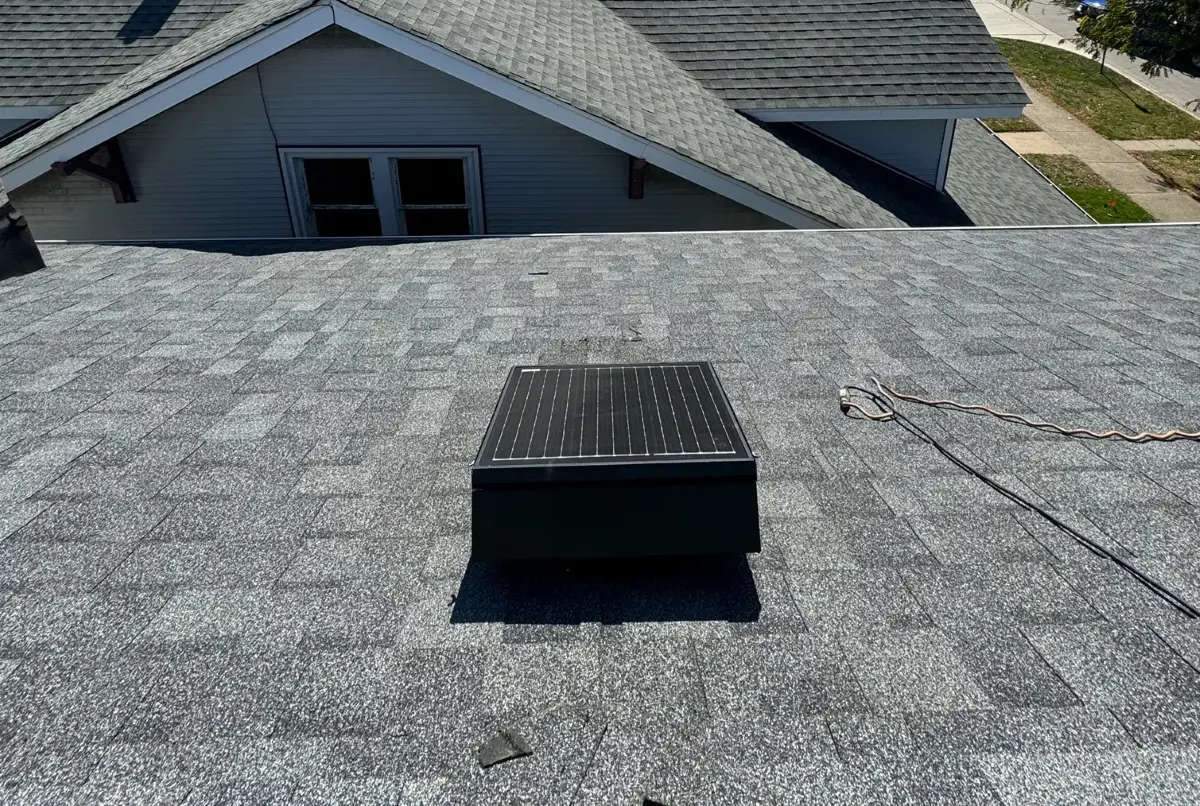
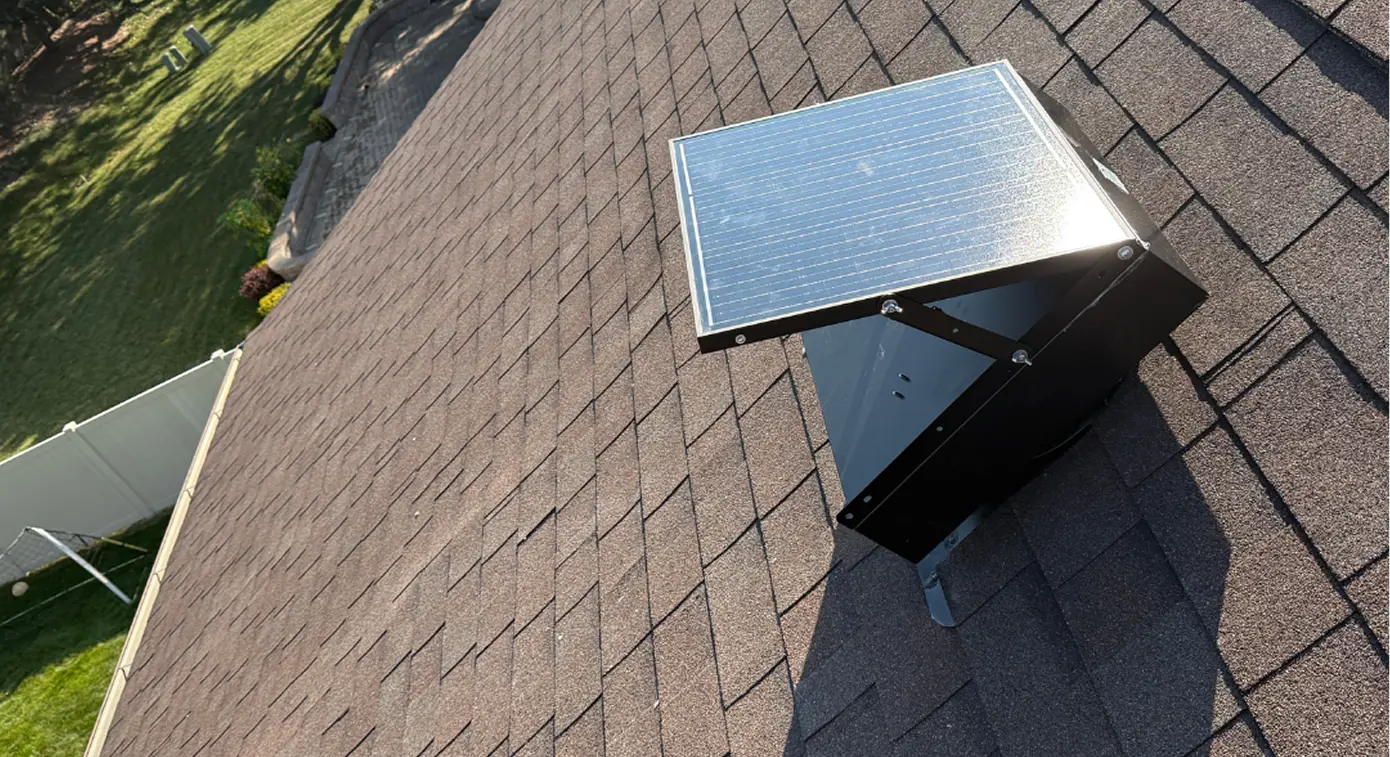
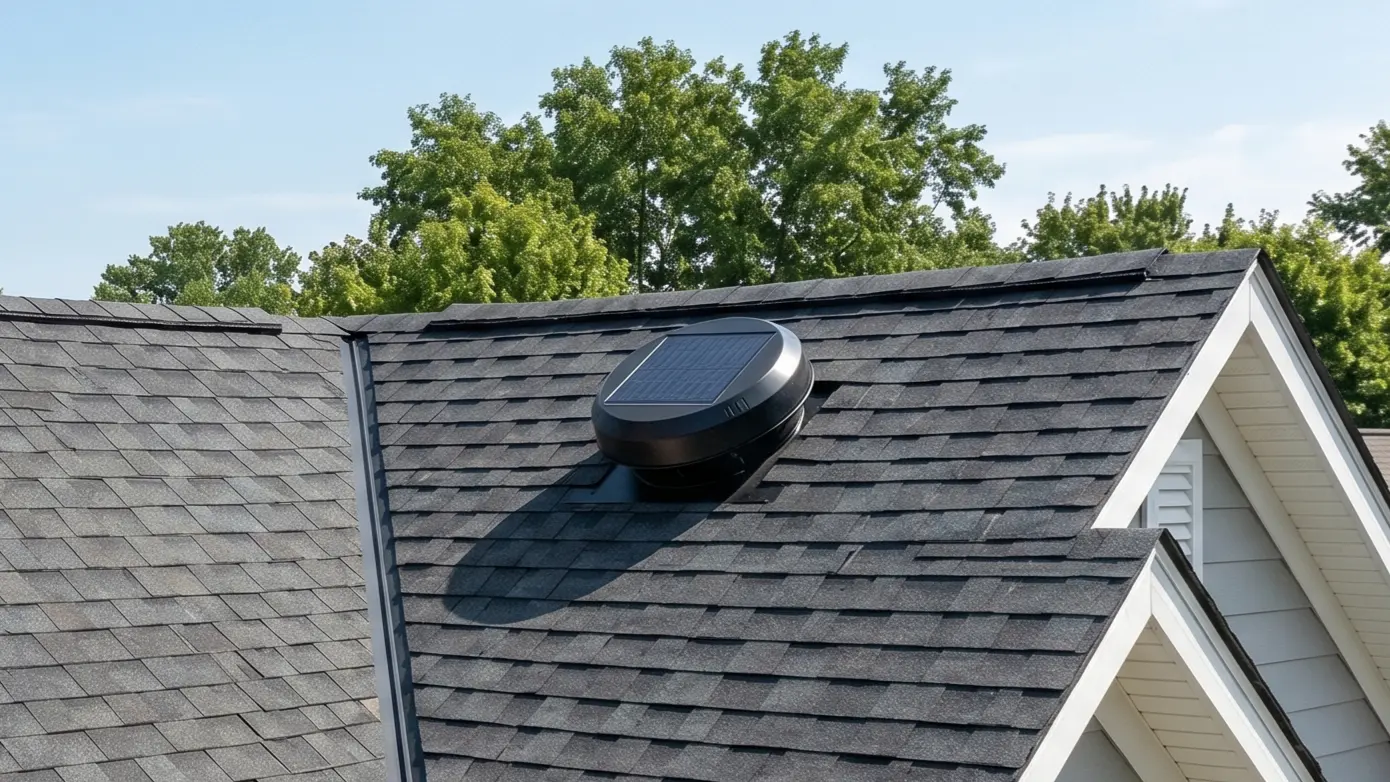
Solar attic fans run from a built-in solar panel, with no grid power, no electrician, and no electric bill. The U.S. Department of Energy’s Building America Solution Center recommends solar-powered units for active attic ventilation because they only run when the sun is shining, which helps avoid pulling in higher-humidity night air. They also tend to operate at lower CFM ratings, which means less negative pressure on the attic.
Green Attic’s standard solar fan is rated at 2,020 CFM, which is designed to circulate the air in a typical Chicago-area attic 10 to 12 times per hour, which is the standard target for effective attic ventilation.
If you already have a working electric fan, do not rush to replace it. Inspect the entire attic first and decide whether the fan, intake, and air sealing are working together. When it eventually fails, replace it with a solar unit instead of another electric one.
The Backup Power Option
Standard solar-only fans run when the panel receives enough daylight, which is usually when they are needed most: warm, sunny days with peak attic heat.
For homes with heavily shaded roofs, north-facing fan placement, or ongoing humidity issues, Green Attic offers a low-voltage 24V backup power option. A small transformer connects to your home’s existing power, and built-in temperature and humidity sensors trigger backup operation only when attic conditions cross set thresholds. This means minimal grid draw, only when the attic actually needs it.
Permit note: A solar-only fan installation typically does not require a permit because there is no line-voltage wiring. The 24V backup power option may require a permit and additional installation fee, depending on your local authority's rules and whether a nearby power source is already available. We confirm both in your written estimate before any work begins.
Cost of Ownership
A standard Green Attic solar attic fan starts around $750 installed. Over 10 years, that works out to about $75 per year before factoring in comfort, attic heat reduction, moisture control, or roof-deck protection.
A solar fan with the 24V backup power option starts around $950 or around $95 per year over a 10-year period.
That does not mean every homeowner should install one. A solar attic fan is only a good investment if ventilation is the actual problem. If your attic first needs air sealing, baffles, bath fan correction, mold treatment, or insulation, those improvements should come first so the fan can support the system properly instead of being asked to solve the root issue on its own.
Green Attic 10-Year Warranty
Most companies install a fan and hand you the manufacturer's warranty. If something needs attention in year three, the process is simpler when your installer handles the warranty, replacement, and repair directly.
Green Attic covers all fan components for 10 years with free repair or replacement. If an issue comes up, call us, and we will come out to fix the issue. That is the difference between buying a fan and getting a professionally installed attic ventilation solution.
Final warranty terms, including coverage scope, exclusions for storm damage, animal damage, third-party installations, roof defects, and pre-existing roof or attic conditions, are confirmed in your written estimate.
What Green Attic Checks During the Inspection
A proper solar fan recommendation comes from an attic inspection, not a guess. We check:
- Attic floor air sealing: top plates, can lights, plumbing, attic hatch
- Insulation type and depth (R-60 cellulose target)
- Soffit intake: open, blocked, missing
- Baffles: present and clear
- Existing ridge, gable, or roof vents
- Bath fan discharge: outdoors or into the attic
- Moisture staining, mold indicators, rusted nails, frost history
- Roof deck condition
- Existing fan condition (if any)
- Roof pitch, sun exposure, and access
- Fan sizing for your attic square footage
You leave the inspection with one of three recommendations:
- Recommended: Attic conditions support the fan, and it will deliver real value.
- Optional: A fan can help, but other attic improvements should be handled first.
- Not recommended: Air sealing, insulation, intake, or moisture issues need to be solved first.
FAQ
Will a solar attic fan lower my electric bill?
A solar attic fan can lower your electric bill by reducing attic heat and cooling load in a properly air-sealed attic. Specific savings depend on your home, roof exposure, HVAC system, thermostat habits, and intake ventilation. We do not promise a guaranteed payback, but we do promise active ventilation with no electric operating cost.
What size fan do you install?
The standard solar fan we install is rated at 2,020 CFM, which is sized to move the air in a typical Chicago-area attic 10 to 12 times per hour. Larger or unusually shaped attics may need an upgraded unit, and we confirm the proper sizing during the inspection.
Will it work at night or under snow?
A standard solar-only fan does not run at night and under snow until it melts or slides off because it only runs when the panel receives enough daylight. The 24V backup power option keeps it operating during low-sun periods when sensors detect heat or humidity.
Will it fix existing mold?
No, a solar fan will not fix existing mold, but it can help improve airflow and reduce future moisture buildup once the mold is treated and the source of the moisture is corrected. .
Do I need a permit?
No, solar-only fan installations typically do not require a permit because there is no line-voltage wiring. The 24V backup power option may require a permit and additional installation fee, depending on your local authority and whether a nearby power source is available. We confirm both in your written estimate.
Will it void my roof warranty?
No, it will not if it is installed correctly, but any roof penetration must be properly flashed and sealed. Roof warranty terms vary, so we recommend checking your roofing manufacturer’s requirements and your written project scope before installation.
Should I replace my working electric fan?
No, you do not have to replace your electric fan if it's still working. Inspect the system first. A solar replacement is worth considering when the fan fails or when other attic work is already being done.
What about spray foam or conditioned attics?
Solar attic fans are designed for vented unconditioned attics. If your attic is spray-foamed at the roof deck or treated as a conditioned space, it needs a different evaluation entirely.
Bottom Line
A solar attic fan is a strong product in the right attic, but it is the wrong shortcut in the wrong attic. If your attic floor is sealed, capped with R-60 cellulose, and has open intake ventilation, a solar fan is a smart low-operating-cost upgrade backed by 10 years of free repair or replacement. If your attic has air leaks from the house, blocked soffits, or moisture issues, those problems should be fixed first before considering installing a solar attic fan.
Our job is to inspect each attic carefully and recommend the right fix, whether that means a solar fan, air sealing, insulation, ventilation improvements, or moisture correction first.
Schedule a free attic inspection. Call 847-929-9492.
Share with the world